
Sandtray Therapy Training and Consultation
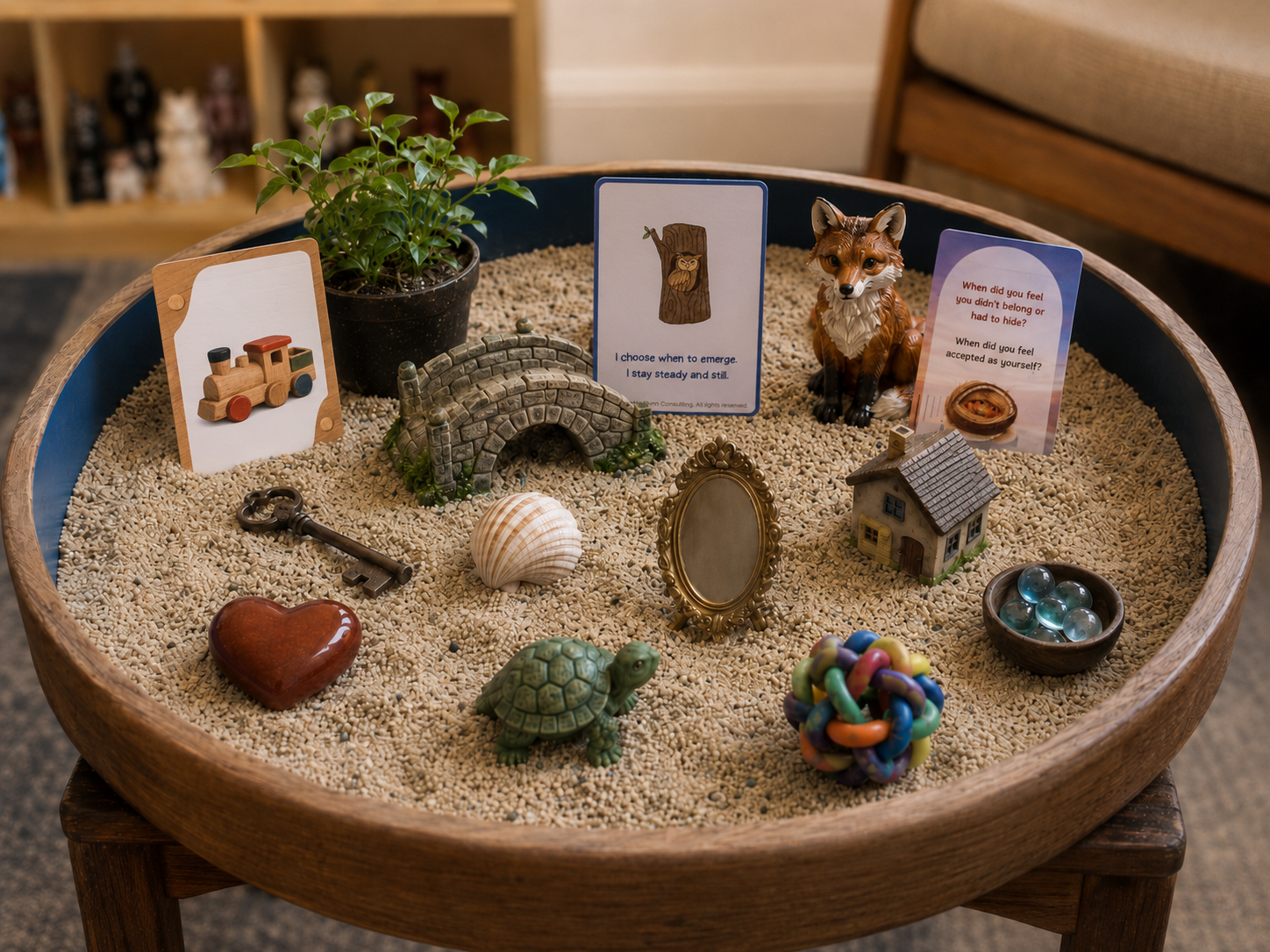
Sandtray therapy invites a different kind of listening.
Through image, placement, and process, clients communicate in ways that often move beyond words.
Many therapists feel drawn to this work, yet find themselves unsure in the moments when something meaningful is happening but not easily explained.
This training pathway is designed to support those moments.
You will learn how to follow the process in the tray, respond with intention, and support integration in ways that are clinically grounded and developmentally attuned.
All trainings and consultation experiences are offered virtually, allowing you to learn and participate from wherever you are.
Trainings are self-paced.
Consultation is live and relational.
Participation in these trainings and consultation experiences can be documented as part of your professional development and may be included in applications for credentialing through World Association of Sand Therapy Professionals.
Who This Is For?
This training is designed for licensed mental health professionals, registered interns, and graduate-level clinicians who want to integrate Sandtray therapy into their clinical work.
Start Here
Foundations of Sandtray Therapy: A Practical Introduction for Clinicians
12 CE Hours | Self-paced | Beginner to Intermediate
If you’re new to sandtray or unsure where to begin, this is your starting point. No prior experience is required.
This course introduces the core elements of sandtray therapy, including therapist stance, symbolic expression, nervous system awareness, and the structure of a session.
You will learn to:
Describe foundational principles of sandtray therapy
Identify directive and non directive therapist stance
Explain symbolic expression in clinical work
Outline the structure of a sandtray session
Recognize common challenges in early practice
Understand nervous system responses within the tray
Stay Connected to the Work
Sandtray Consultation Circle
Ongoing | Live consultation (drop-in)
A space for case discussion and clinical reflection.
Bring your work, your questions, and the moments that feel unclear. This is where therapists strengthen their clinical thinking and build confidence through shared reflection.
You may attend as needed.
Apply It in Session
Using Sandtray Therapy in Clinical Practice: Skills for Real Sessions
12 CE Hours | Self-paced | Beginner to Intermediate
This course focuses on applying sandtray therapy in real clinical settings.
You will learn how to track what is happening in the tray, respond when you feel unsure, and support movement without moving too quickly into interpretation.
You will learn to:
Apply sandtray techniques in session
Differentiate observation from interpretation
Respond to uncertainty in the tray
Identify movement and stagnation
Develop case conceptualizations
Navigate moments of feeling stuck
Deepen Through Immersion
Sandtray Consultation Immersion: Extended Case-Based Consultation
6 to 12 CE Hours | Live | Intermediate to Advanced
An immersive consultation experience with extended time to explore clinical material.
Participants engage in structured case discussion, observation, and reflection, allowing for deeper understanding of process and clinical decision-making.
You will learn to:
Analyze sandtray cases using structured observation
Formulate clinically appropriate responses
Differentiate observation and interpretation
Expand comfort with complex clinical moments
Integrate feedback into decision-making
Identify ethical considerations in case work
Expand Your Work
Sandtray Therapy and Trauma: Supporting Regulation and Processing
6 CE Hours | Intermediate
Focuses on trauma-informed application and nervous system regulation within the tray.
Sandtray Therapy and Expressive Integration: Journaling, Music, and Story
6 CE Hours | Intermediate
Explores how to support integration through journaling, music, bibliotherapy, and reflective practices.
Sandtray Therapy with Children and Adolescents: Developmentally Attuned Practice
6 CE Hours | Intermediate
Applies sandtray through a play therapy lens with attention to developmental needs and regulation.
Articulate Your Clinical Work
Documenting and Presenting Sandtray Therapy Cases: Clinical Clarity and Ethics
6 CE Hours + 3 consultation hours | Intermediate
Supports clinicians in organizing, documenting, and presenting sandtray cases clearly and ethically.
Step Into Leadership
Providing Sandtray Consultation and Training: Ethics and Facilitation
12 CE Hours + 6 consultation hours | Advanced
Preparation for therapists who want to provide consultation and training in sandtray therapy, with a focus on ethical responsibility and facilitation.
A Developmental Pathway
Most therapists begin with Foundations, then move into Clinical Practice while joining consultation.
Over time, therapists build a combination of training, consultation, and clinical experience as they integrate sandtray into their work.
Continuing Education
Continuing education credit may be available for select trainings. Programs are designed to meet criteria for professional development and continuing education through organizations such as National Board for Certified Counselors and Association for Play Therapy.
Participants seeking CE credit will complete a course evaluation and any required post-course assessments.
Interested in Joining?
Kindly Answer the Informations Below
If you’ve felt drawn to Sandtray therapy and want to feel more confident using it in your work, this is a place to begin.