
EMDR Therapy Basic Trainings
EMDRIA Approved Basic Training
EMDR Basic Training with Jackie Flynn
Build your foundation. Grow your confidence. Bring thoughtful care to your EMDR practice.
Learning a new approach to therapy is an important step. You deserve a learning space where you can ask questions, practice with support, and connect what you are learning to the people you serve.
Join Jackie Flynn for EMDR Basic Training in a supportive, experiential learning environment. Explore upcoming online and in-person opportunities and choose the training that fits your schedule.
EMDRIA Approved Trainer

NBCC CE HOURS PROVIDED
40 CEs
Live Virtual + In Person
TRAINING FORMATS
Training Overview
A Foundation Built Through Learning, Practice, and Support
EMDR Basic Training brings together instruction, supervised practice, and consultation to help you develop foundational knowledge and begin integrating EMDR into your clinical work. EMDRIA’s minimum training requirements include the following components.
Learn the EMDR Model
20 Hours of Instruction
Explore the foundations of EMDR, the Adaptive Information Processing model, the eight phases, and considerations for case conceptualization and treatment planning.
Practice with Guidance
20 Hours of Supervised Practicum
Participate in structured practice with observation and feedback as you become familiar with EMDR procedures.

Connect Learning to Clinical Work
10 Hours of Consultation
Receive guidance as you apply your learning to clinical cases, consider client readiness, and develop your EMDR skills.
A Clearer Path for Trauma Treatment
Trauma does not always show up as a clear story.
It may appear as anxiety, shame, avoidance, perfectionism, relationship patterns, emotional overwhelm, shutdown, or body-based reactions that seem difficult to change.
Clients may understand what happened and still react as though the experience is happening now.
EMDR gives clinicians a structured way to understand and work with these experiences.
Throughout this training, you will learn the foundational EMDR model while developing the clinical judgment needed to assess readiness, plan treatment, support processing, and integrate EMDR thoughtfully into your existing clinical work.
What You’ll Learn
By completing this training, participants will strengthen their ability to:
Understand the three-pronged approach of EMDR Therapy, including past experiences, present triggers, and future adaptive responses.
Understand the components of EMDR assessment, including images, negative and positive cognitions, emotions, subjective units of disturbance, and body sensations.
Apply Phase 8 Re-evaluation to assess treatment progress and determine appropriate next steps.
Explore the relationship between cognition and body sensations, including EMDR applications involving illness and somatic concerns.
Identify professional, ethical, and legal considerations related to the use of EMDR Therapy within professional scope of practice.
Upcoming Basic Trainings
-
![]()
EMDR Therapy Basic Training
Dates: January 2027
Time: January 07 - 11
Location: Marshall Lyles's Workshop, 300 Allen St., Austin, TX, 78702 (In person and Online)
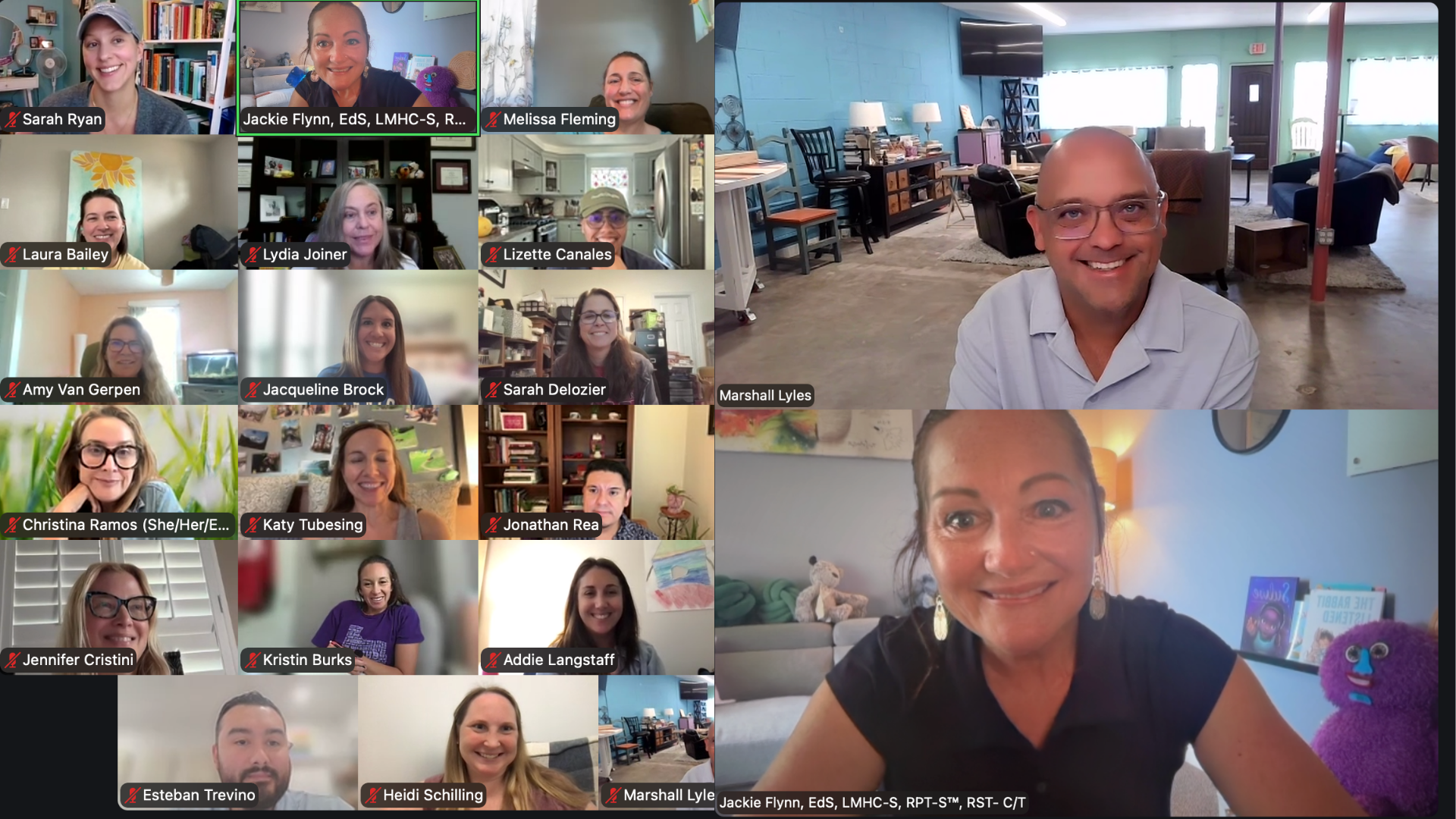
Trainer: Jackie Flynn and Marshall Lyles
Tuition: $ 1697
Registration: Open -
![]()
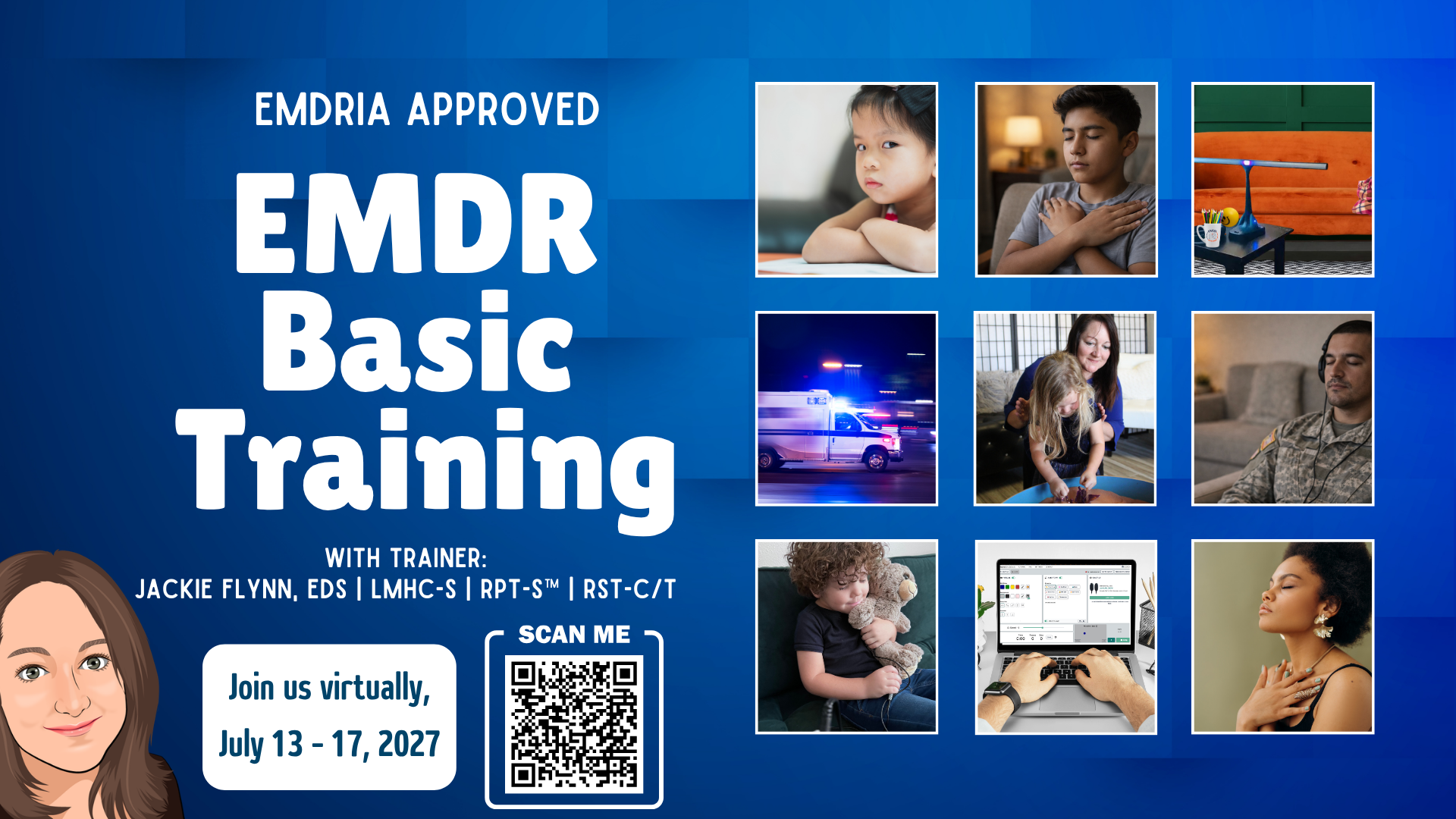
EMDR Therapy Basic Training (Virtual)
Dates: July 2027
Time: July 13 - 17
Location: Live Online
Trainer: Jackie Flynn
Tuition: $ 1697
Registration: Open -
![]()
EMDR Therapy Basic Training
New EMDR Basic Training dates will be announced here. Please contact our team with questions about upcoming opportunities.

Why Attend?
This training may be a good fit for you if you want to:
Help clients who continue to feel stuck even after gaining insight or learning coping skills.
Better understand how trauma can appear when clients do not identify their experiences as trauma.
Know when a client is ready for processing and when additional preparation may be needed.
Feel more grounded when clients become flooded, disconnected, avoidant, or shut down.
Develop a structured way of thinking clinically through the EMDR model.
Practice EMDR with guidance, feedback, consultation, and support.
These themes are directly reflected in the current January 2027 CE-Go training description.
Learning Objectives
-
Apply the Adaptive Information Processing model to support case conceptualization and treatment planning.
-
Recognize connections between present-day symptoms, beliefs, emotional responses, body sensations, and earlier experiences.
-
Assess client readiness for EMDR processing and identify situations in which additional preparation or stabilization may be indicated.
-
Support trauma processing using a structured, ethical, practical, and clinically thoughtful approach.
-
Begin integrating EMDR therapy into clinical practice while remaining within professional scope of practice, licensure requirements, supervision requirements, and ethical standards.

Continuing Education
This live EMDR Therapy Basic Training offers 40 NBCC continuing education credit hours.
Jackie Flynn Consulting is an NBCC Approved Continuing Education Provider, ACEP No. 8022, and is responsible for the program.
Full participation in the required live training activities is necessary for continuing education credit.
Participants are responsible for confirming that the continuing education hours offered meet the requirements of their individual licensing or regulatory board.
Attendance and completion requirements must be met before continuing education documentation is issued.
EMDR Basic Training Policies and Procedures
-
Participants are responsible for confirming that they meet current EMDRIA eligibility requirements before registering.
Current eligibility requirements are available through EMDRIA.
Participants must meet EMDRIA eligibility requirements at the time of registration and throughout the training.
Eligible participants may include licensed mental health professionals, qualifying pre-licensed mental health professionals, and eligible graduate students who meet EMDRIA requirements.
Chemical dependency or substance abuse licenses alone do not meet EMDRIA eligibility requirements unless the participant also holds a qualifying mental health license or credential.
Graduate students must meet EMDRIA requirements, including being enrolled in a qualifying master’s or doctoral mental health program and being in the practicum or internship portion of their program.
Graduate students may be asked to provide documentation of eligibility, including a letter from a supervisor.
The training provider reserves the right to request documentation of eligibility before or after registration.
If a participant is found to be ineligible, the participant may not attend the training. No refund will be issued. The participant may transfer their registration to another eligible mental health clinician according to the transfer policy below.
-
This EMDRIA-approved EMDR Basic Training includes:
20 hours of instructional material
20 hours of supervised practicum
10 hours of consultation
Participants must complete all required components to receive a certificate of completion for EMDR Basic Training.
The 10 required consultation hours are included in the registration fee.
Participants must complete the full EMDR Basic Training within 12 months from their initial start date.
A certificate of completion is issued only after all required instructional, practicum, consultation, learner assessment, evaluation, and attendance requirements are completed.
-
Full attendance is required.
Participants are expected to arrive on time, remain present, and participate for the full duration of each required training component.
Participants must attend all instructional hours, supervised practicum hours, and consultation hours.
Missed time may prevent completion of the training.
If a participant misses more than 15 minutes of required content, the training team will determine what is needed for the participant to complete the missed material, when possible.
Additional fees may apply for make-up training, make-up practicum, make-up consultation, or cohort transfer.
A participant who misses substantial instructional or practicum time may be required to transfer to a future cohort, if space is available.
Completion is not guaranteed if a participant misses required training time.
-
Participants must attend from a confidential and distraction-free space.
Participants may not attend from a vehicle, public space, shared room, or any setting where confidentiality cannot be maintained.
Participants are responsible for protecting the privacy of all clinical material, practice partners, consultation discussions, and training participants.
Recording, screenshots, artificial intelligence transcription, artificial intelligence meeting assistants, or any other form of unauthorized capture are not permitted.
Participants may not share training materials, links, recordings, handouts, slides, or protected training content with others.
Violation of confidentiality may result in removal from the training without refund.
-
Virtual and live stream participants must have a stable internet connection, working camera, working microphone, and headphones.
Participants must remain visible on camera during required live training activities unless given permission by the training team.
Participants must use headphones to support confidentiality.
Participants are expected to test their technology before each training day.
Technical issues on the participant’s end do not qualify for a refund.
If a participant’s technology prevents full participation, the participant may be required to complete missed content in a future cohort or make-up format, if available.
Additional fees may apply.
-
This training includes in-person and live stream participation.
In-person participants attend at Marshall’s workshop in Austin, Texas.
Live stream participants attend virtually in real time.
All participants must attend live and participate in required activities.
In-person attendance is limited to 20 participants due to the size of the workshop space.
Online attendance may be available for additional participants.
-
Participants are expected to engage professionally and respectfully in practicum and consultation activities.
Practicum activities are for training purposes and are not therapy.
Participants are responsible for attending to their own emotional readiness and well-being during practice activities.
Participants may choose appropriate practice material within the guidelines provided by the trainer.
Participants should not use highly distressing, highly complex, or clinically inappropriate material during practicum.
The training team may redirect or modify practicum participation when needed to support safety, learning, or ethical practice.
Consultation is designed to support integration of EMDR therapy into clinical practice.
Participants are responsible for bringing appropriate questions and clinical application material to consultation while protecting client confidentiality.
-
All registrations are final.
No refunds are offered after registration.
This includes standard rate registrations, community rate registrations, missed attendance, participant technology issues, schedule conflicts, illness, emergencies, changes in employment, changes in licensure status, and participant withdrawal.
If a participant is unable to attend, the participant may transfer their registration to another eligible mental health clinician according to the transfer policy below.
-
Participants may transfer their registration to another eligible mental health clinician.
The participant is responsible for finding and coordinating with the replacement clinician.
The replacement clinician must meet EMDRIA eligibility requirements.
The replacement clinician must complete any required registration forms, participant agreements, eligibility documentation, and training paperwork before attending.
The training provider must approve the replacement clinician before the transfer is finalized.
Transfers are not complete until the training provider confirms the replacement clinician’s eligibility and registration.
Transfers may not be available after training begins.
The original participant is responsible for any private payment arrangements between the original participant and the replacement clinician.
The training provider is not responsible for collecting payment from the replacement clinician or reimbursing the original participant.
-
The community rate is offered to support access.
Community rate registration is subject to availability.
Community rate registrations are final and non-refundable.
Community rate registrations may be transferred to another eligible mental health clinician according to the transfer policy.
-
Cohort changes are not guaranteed.
A cohort change may be considered only when space and training logistics allow.
Participants who request a cohort change must contact the training provider as soon as possible.
Additional fees may apply for cohort changes, make-up instruction, make-up practicum, or make-up consultation.
If a participant cannot complete the training within 12 months from the initial start date, the participant may not be eligible to receive an EMDR Basic Training certificate of completion.
-
If the training provider cancels or reschedules the training, participants will be notified as soon as possible.
The training provider will make reasonable efforts to offer a rescheduled training option.
If the provider cancels the training and does not offer a rescheduled option, participants will receive information about available next steps.
The training provider is not responsible for participant travel, lodging, meals, lost income, childcare, or other indirect costs.
Participants are encouraged to make flexible travel arrangements.
-
The training provider is not responsible for delays, disruptions, or cancellations caused by circumstances beyond reasonable control.
This may include natural disasters, public health emergencies, severe weather, government restrictions, power outages, technology platform failures, illness of training faculty, venue issues, or other emergencies.
When possible, the training provider will make reasonable efforts to reschedule or provide an alternative training option.
Refunds are not guaranteed in force majeure situations.
-
Participants are expected to maintain professional and ethical behavior throughout the training.
Participants may be removed from the training without refund for conduct that interferes with learning, safety, confidentiality, or professional standards.
This includes harassment, discrimination, disruptive behavior, intoxication, use of alcohol or illicit substances during training, confidentiality violations, failure to follow training guidelines, or behavior that creates concern for participant or group safety.
-
Participants are responsible for practicing within their professional scope of practice, license, training, supervision, and applicable laws.
Completion of EMDR Basic Training does not expand a participant’s legal scope of practice.
Participants are responsible for obtaining appropriate supervision, consultation, and support when applying EMDR therapy in clinical practice.
-
EMDR Basic Training is not the same as EMDRIA Certification.
EMDR Basic Training provides the foundational training required to begin using EMDR therapy within the participant’s professional scope of practice.
Therapists who wish to pursue EMDRIA Certification must complete additional requirements after Basic Training.
-
Participants must complete required learner assessment materials.
Participants must complete required course evaluation materials.
Participants may also be provided with the opportunity to complete EMDRIA training feedback materials.
Completion of required assessments and evaluations is necessary for training completion documentation.
-
Participants must attend the full training and complete required evaluation materials to receive continuing education credit.
Partial credit may not be available.
Continuing education policies, approval statements, and credit information are provided on the continuing education page or in the menu at the top of the registration site.
Participants are responsible for confirming that the continuing education credit offered meets the requirements of their own licensing board or credentialing body.
-
Participants are responsible for completing required readings and reviewing required training materials.
Required readings and materials will be provided or listed through the training dashboard or pre-training correspondence.
Training materials are for registered participants only and may not be copied, shared, sold, uploaded, distributed, or used to train others.
-
We are committed to supporting reasonable accommodations.
Accommodation requests should be submitted at least 30 days before the training when possible.
Participants may contact jackie@jackieflynnconsulting.com with questions about the accommodation process.
-
Concerns should be shared as soon as possible so they can be addressed in a timely and respectful way.
Participants may submit a formal grievance in writing to jackie@jackieflynnconsulting.com.
Written grievances will be reviewed and responded to within 10 business days when possible.
The response may include clarification, corrective action, referral to the appropriate continuing education provider process, or another appropriate resolution.
-
Fromjackie@jackieflynnconsulting.com.
Participants are responsible for checking their email, spam folder, and training dashboard.
The attendee dashboard may include meeting links, training materials, required forms, additional resources, and updates.
Meeting links are unique to each participant and may not be shared.
-
Participants are responsible for their own well-being, participation, technology, confidentiality, and professional conduct during the training.
The training provider is not responsible for participant technology issues, travel expenses, lodging expenses, lost income, indirect damages, or personal distress related to participation in training activities.
Participants are encouraged to seek appropriate personal, clinical, medical, or supervisory support as needed.
-
Participants agree to first attempt to resolve concerns through the grievance process.
If a dispute cannot be resolved through the grievance process, disputes will be handled according to the dispute resolution process listed by the training provider.
-
By registering and submitting payment, participants acknowledge that they have reviewed and agree to these policies and procedures.
Participants also acknowledge that they are responsible for confirming eligibility, attending all required training components, completing all required consultation hours, protecting confidentiality, and practicing within their professional scope of practice.
Frequently Asked Questions
Do I need previous EMDR training?
No. This is a Basic Training designed to provide the foundational knowledge, supervised practice, and consultation required to begin learning EMDR therapy.
Can I attend virtually?
Yes. The January 2027 training currently offers both in-person attendance and live-stream attendance.
How many people can attend in person?
In-person attendance is limited to 20 participants.
How many continuing education hours are offered?
The live program currently offers 40 NBCC credit hours.
Is consultation part of EMDR Basic Training?
Yes. EMDRIA Basic Training standards require 10 hours of consultation in addition to instruction and supervised practicum.
Do I receive a certificate?
A final EMDR Basic Training certificate of completion is issued after the required Basic Training components have been successfully completed. Continuing education documentation is issued according to the applicable CE requirements.
Can graduate students attend?
Qualifying graduate students may be eligible when they meet EMDRIA's academic, practicum or internship, licensure-track, and supervision requirements. Documentation may be required.
Ready to Begin Your EMDR Training?
You do not have to figure out EMDR alone.
Learn the model with structure, guided practice, consultation, and support so you can begin approaching trauma treatment with greater clarity and confidence.