BEING HUMAN
CARD DECK
Created by: Jackie Flynn
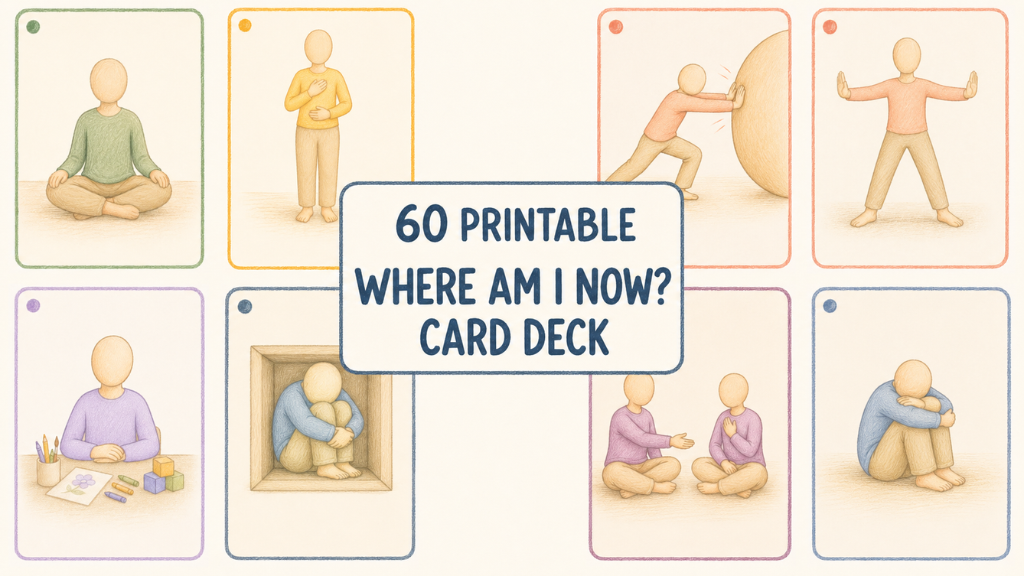
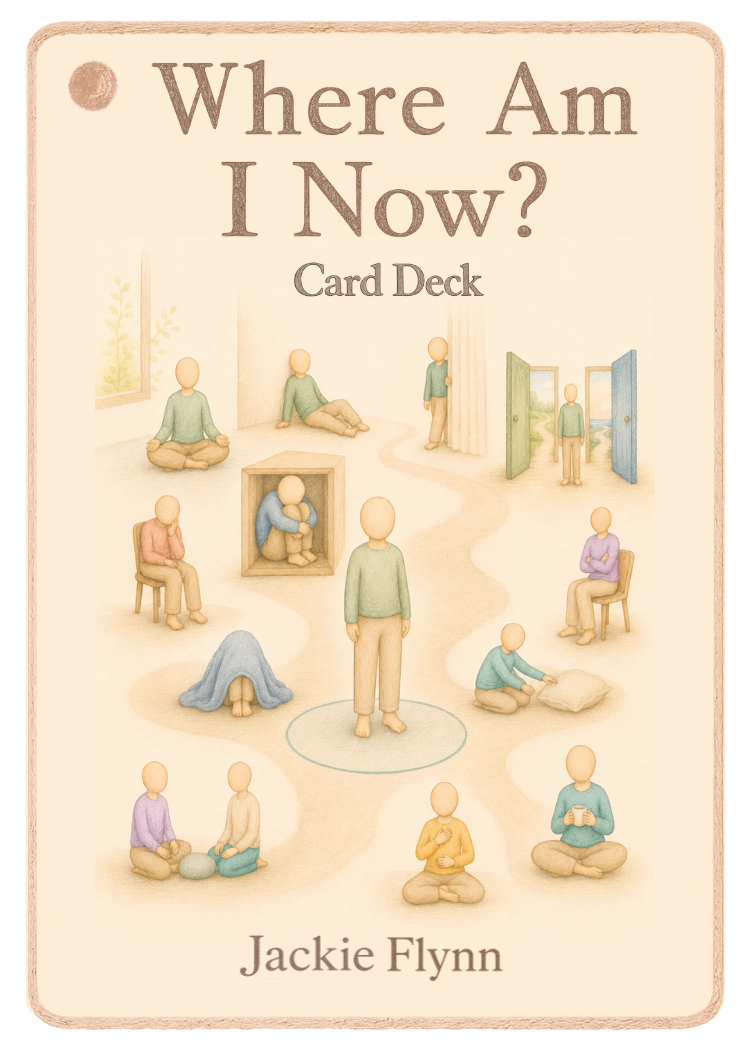
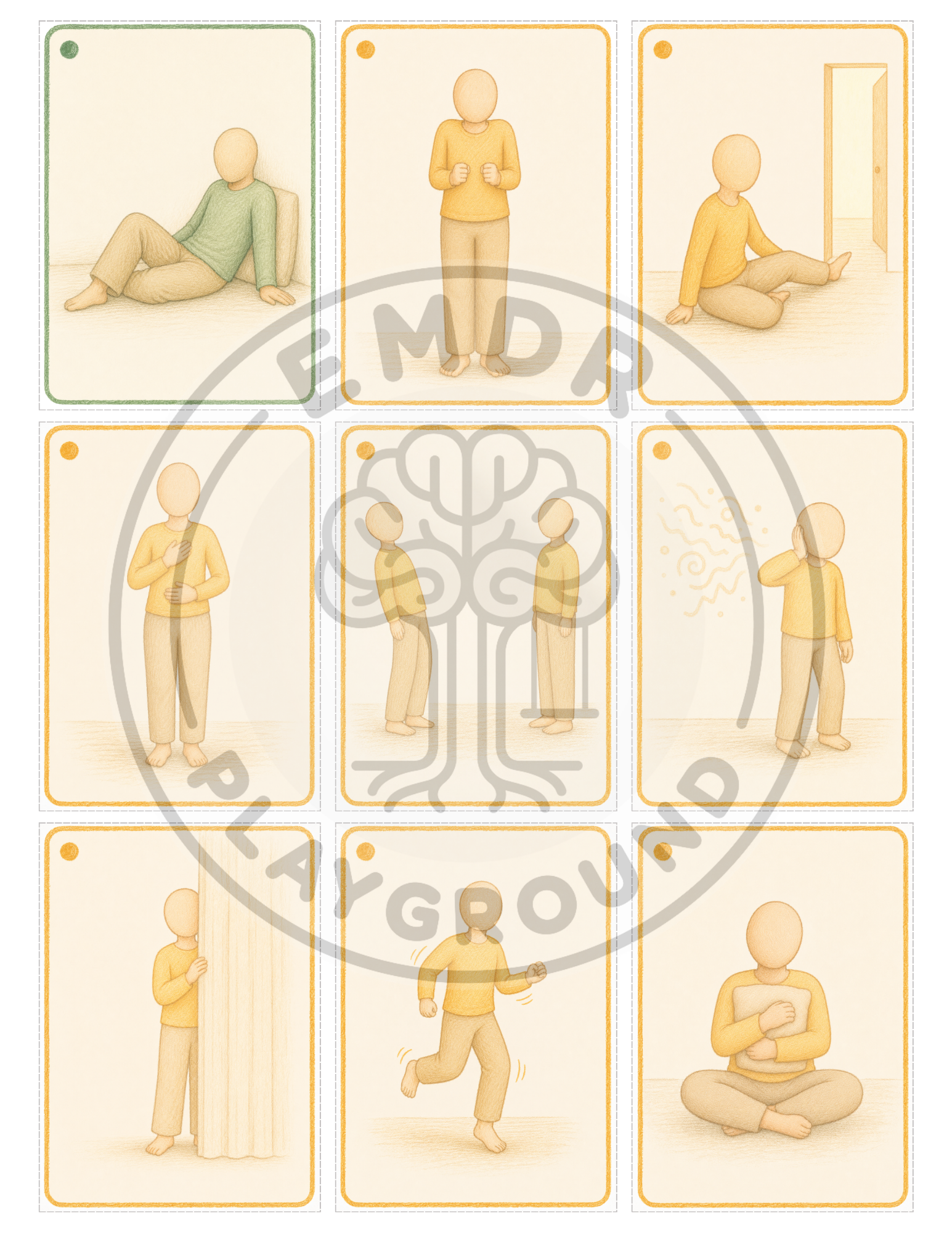
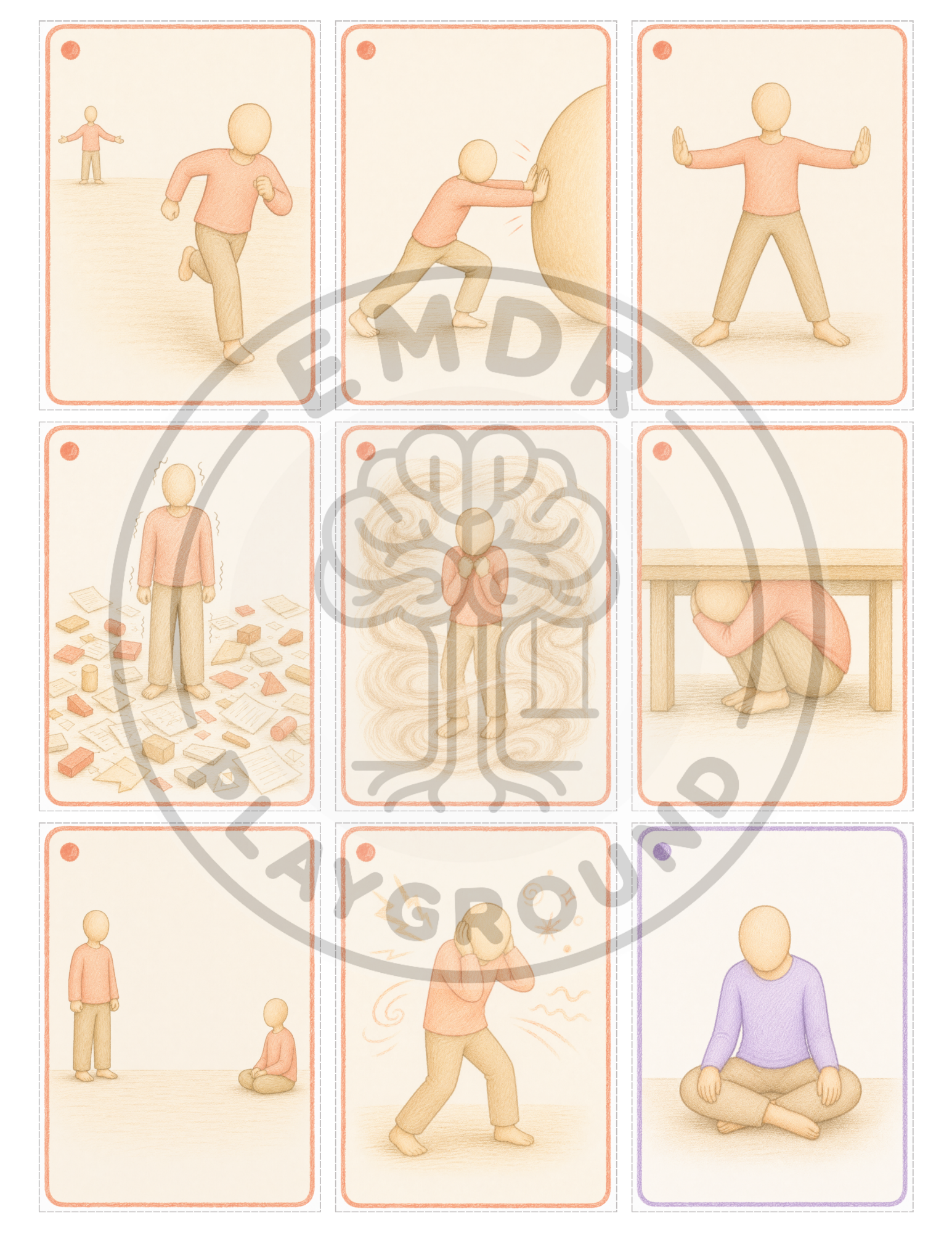
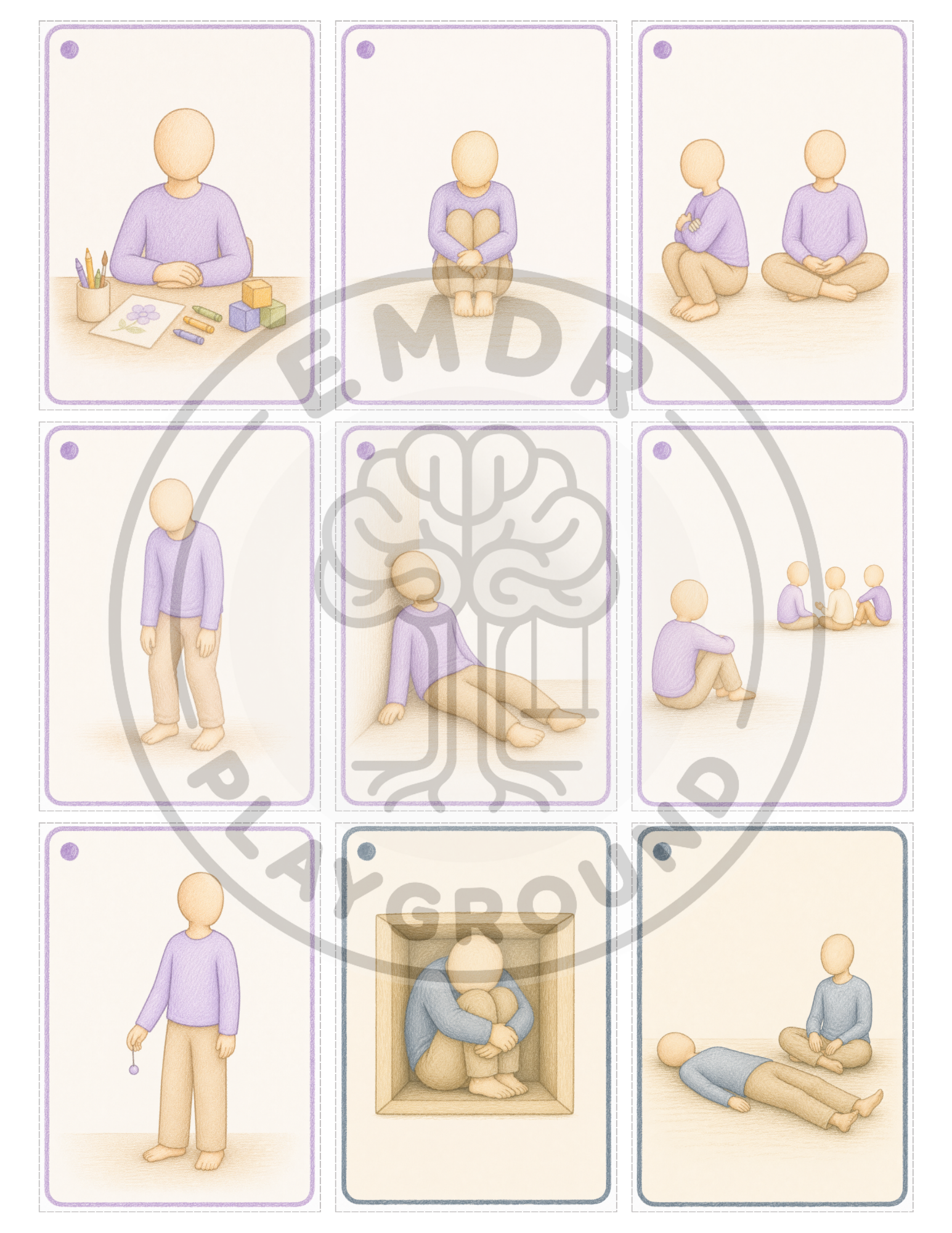
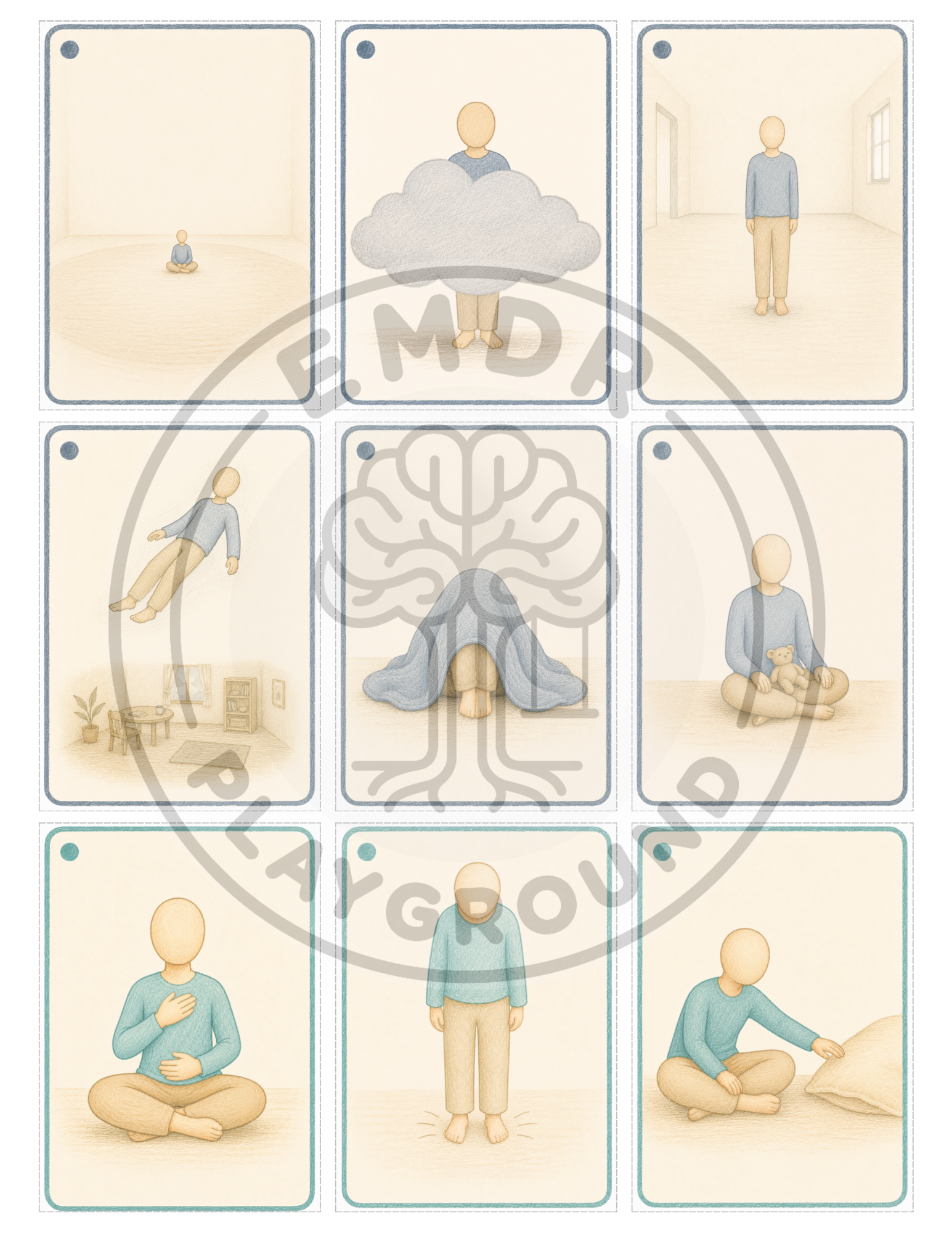
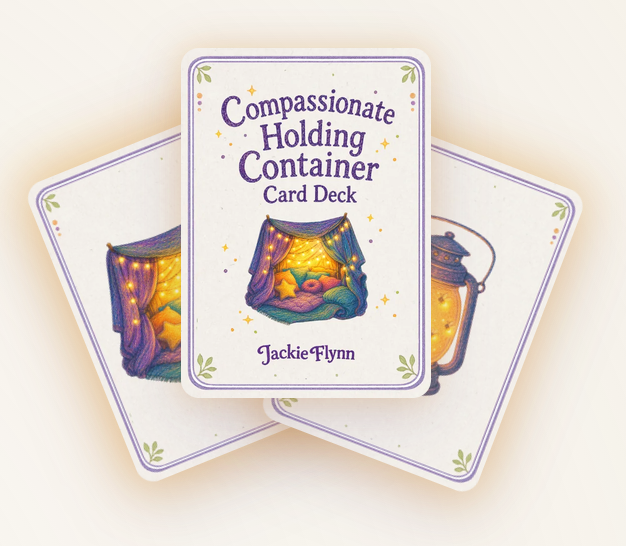
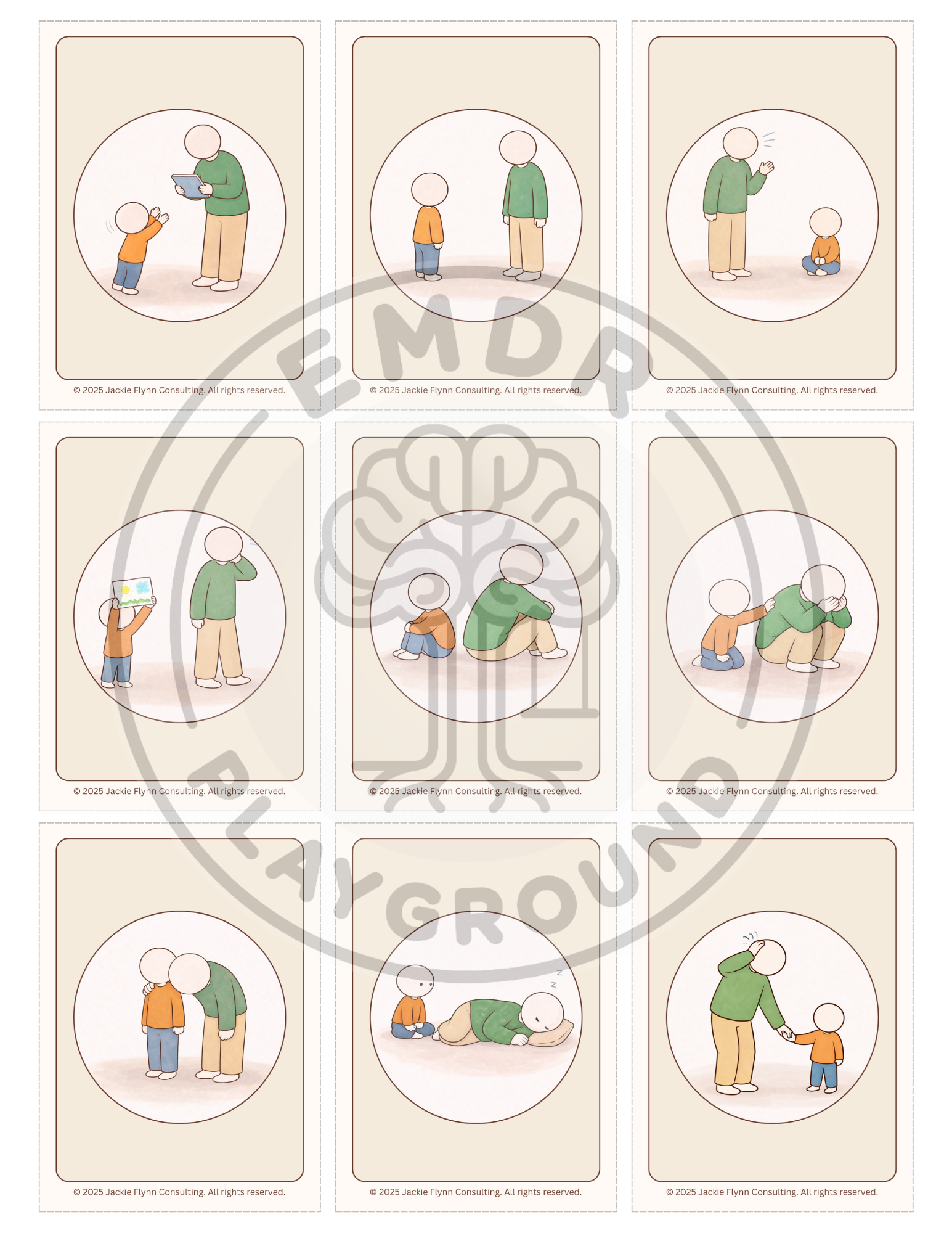
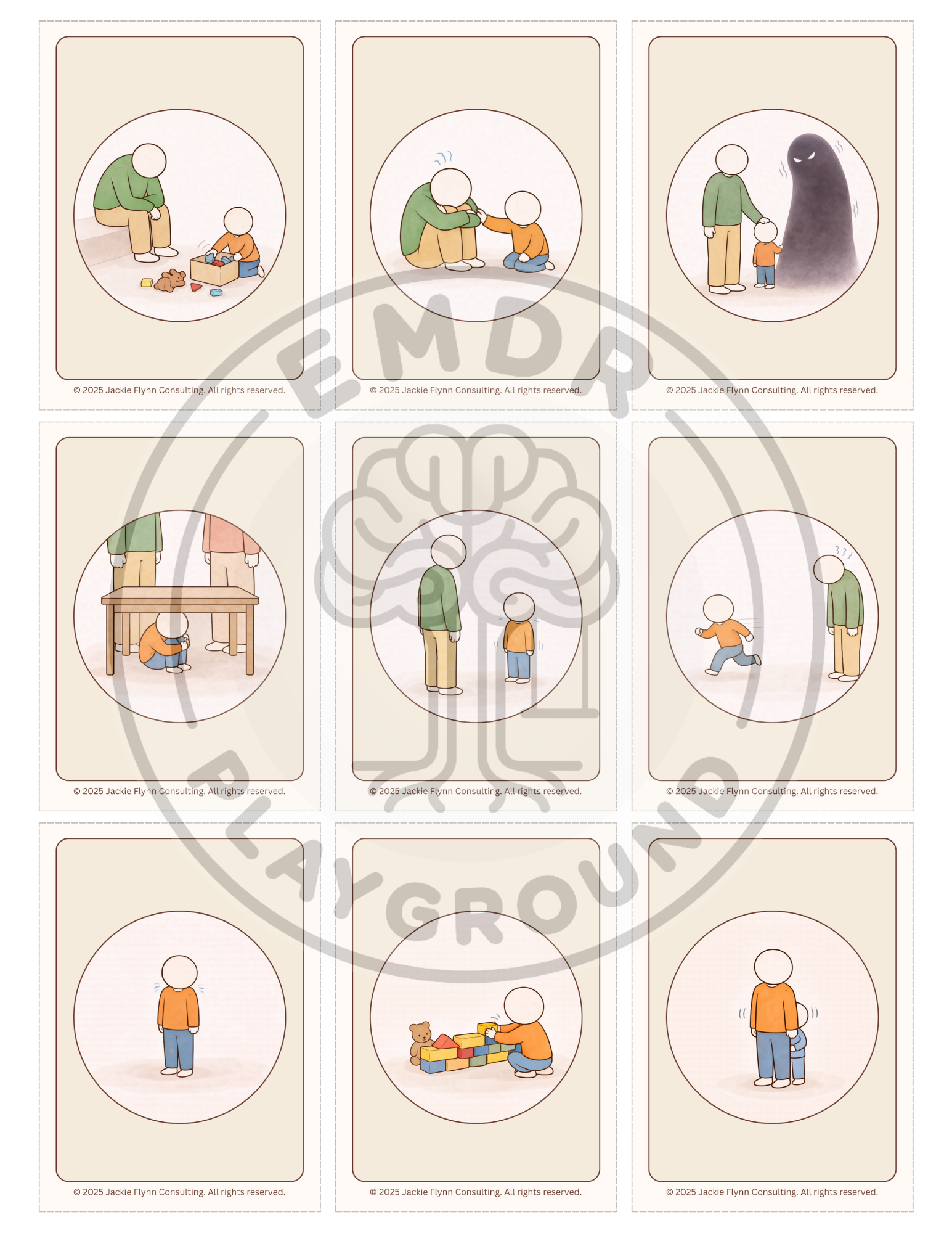
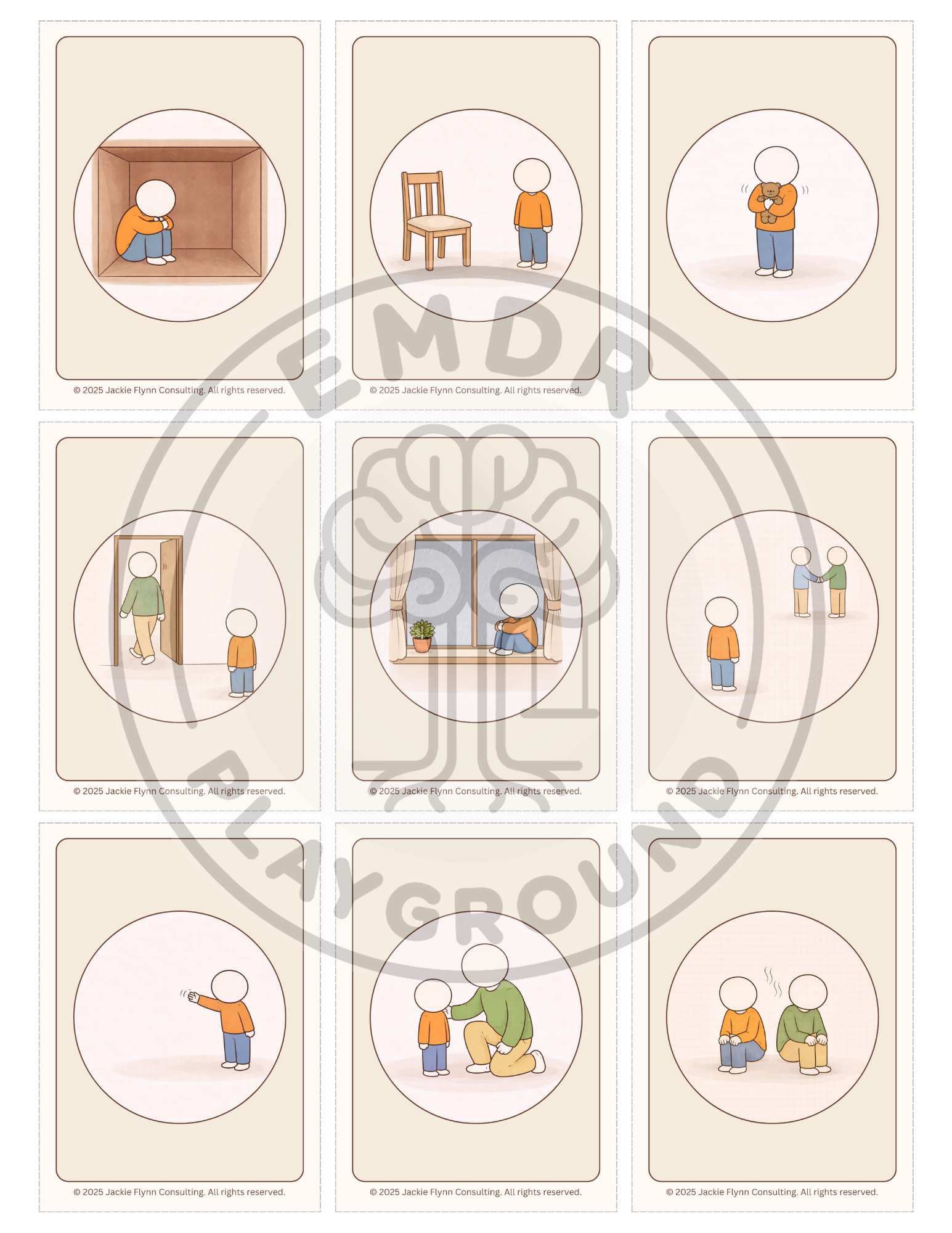
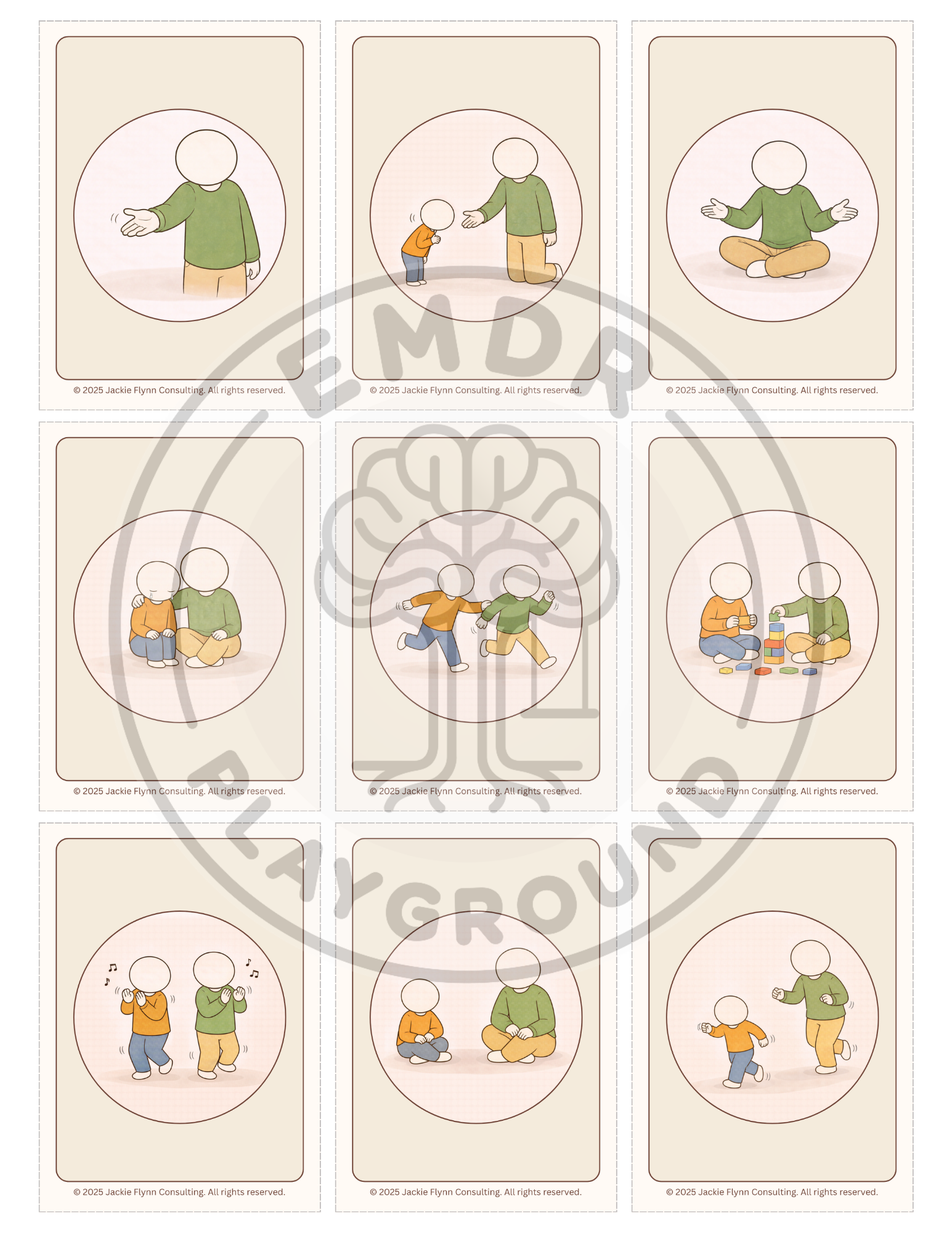
The Being Human Card Deck is a nervous system informed reflection tool created for the therapy room. It invites clients to slow down, notice the ordinary moments of life, and explore the feelings, memories, and experiences that make us human.
Through familiar objects and everyday scenes, the deck offers a gentle starting point for conversations about connection, belonging, comfort, change, and the things we carry with us. Each image leaves room for personal meaning, without requiring a particular feeling or a “right” answer.
When Ordinary Moments Hold a Story
Sometimes the simplest things hold the most personal meaning.
Two coffee mugs sitting side by side. An empty chair at the table. A blanket resting on a familiar seat. A letter waiting to be read. These scenes appear throughout the deck, offering familiar details to spend time with and explore.
An image may bring someone to mind, recall an everyday routine, or invite a thought that has not yet found words. What feels comforting to one person may bring longing or uncertainty to another. The invitation is not to decide what the picture should mean, but to notice what it means to the person choosing it.
The Being Human Card Deck offers space to explore:
connection, belonging, and relationships
comfort and familiar experiences of everyday life
emotions and memories that arise through an image
change, uncertainty, and hope
resilience and self-compassion
the experiences and stories we carry with us
Some images may bring warmth or joy. Others may stir sadness, longing, or nothing at all. Whatever comes up is welcome.
There is no single way to be human, and no right way to make meaning of your own experience.
WHAT’S INSIDE:
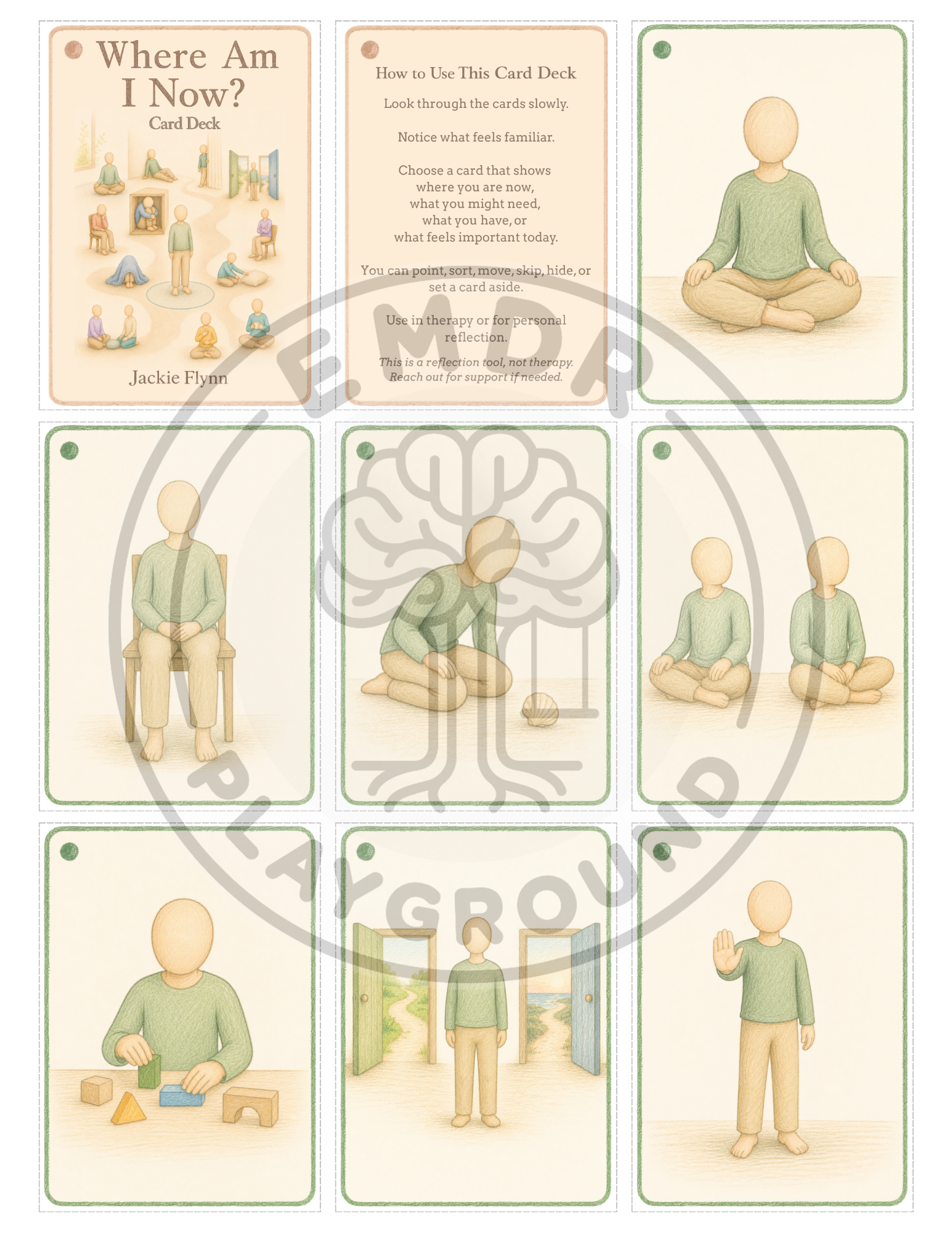
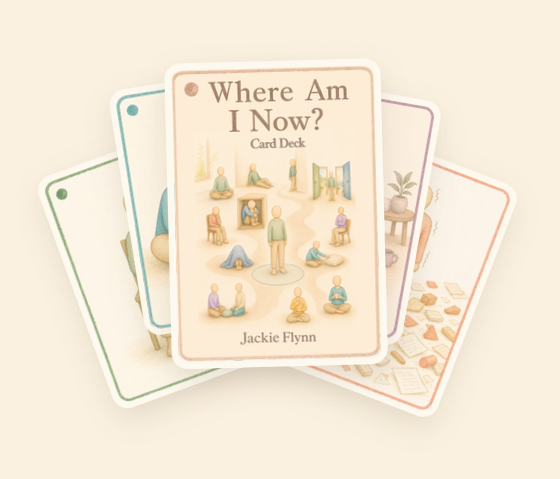
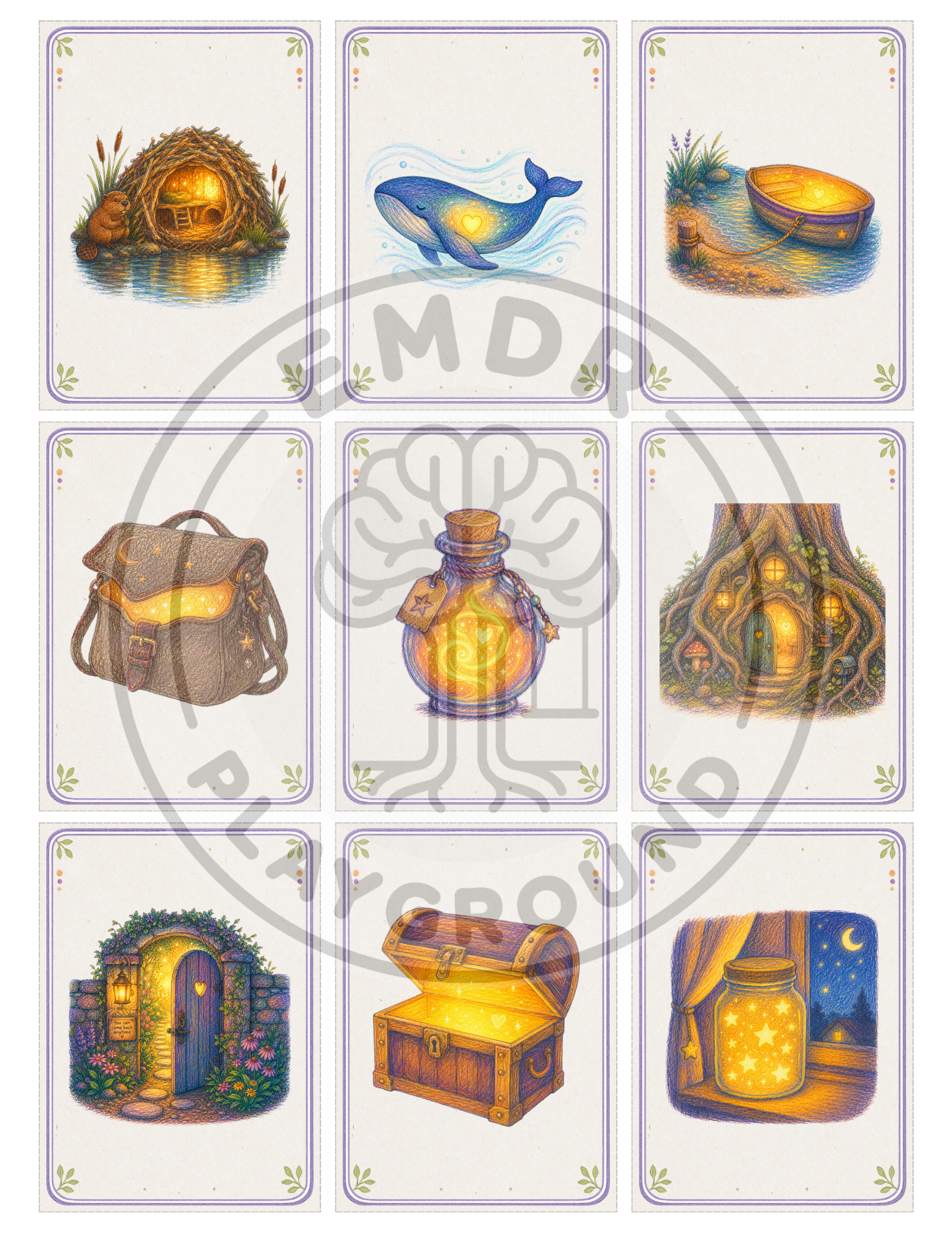
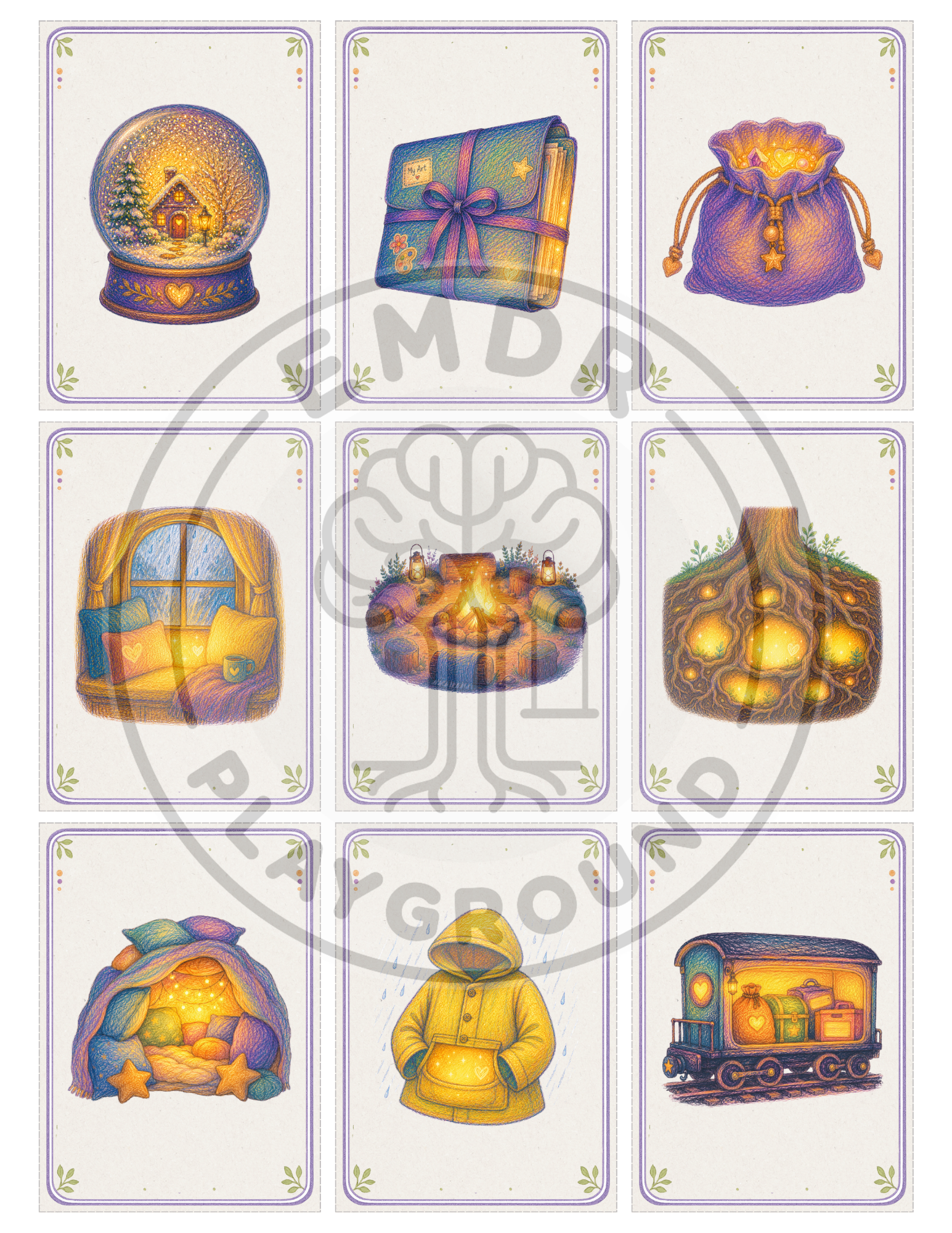
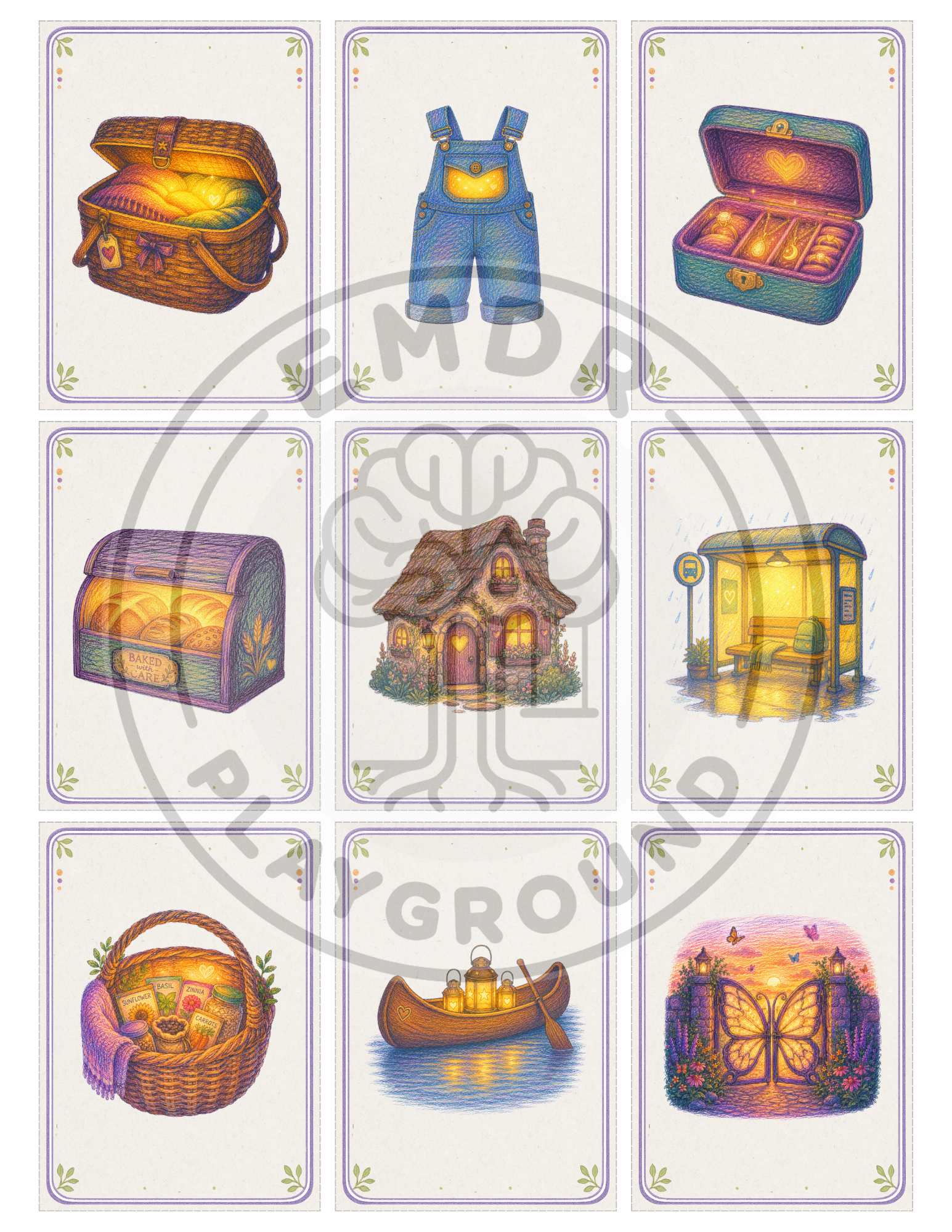
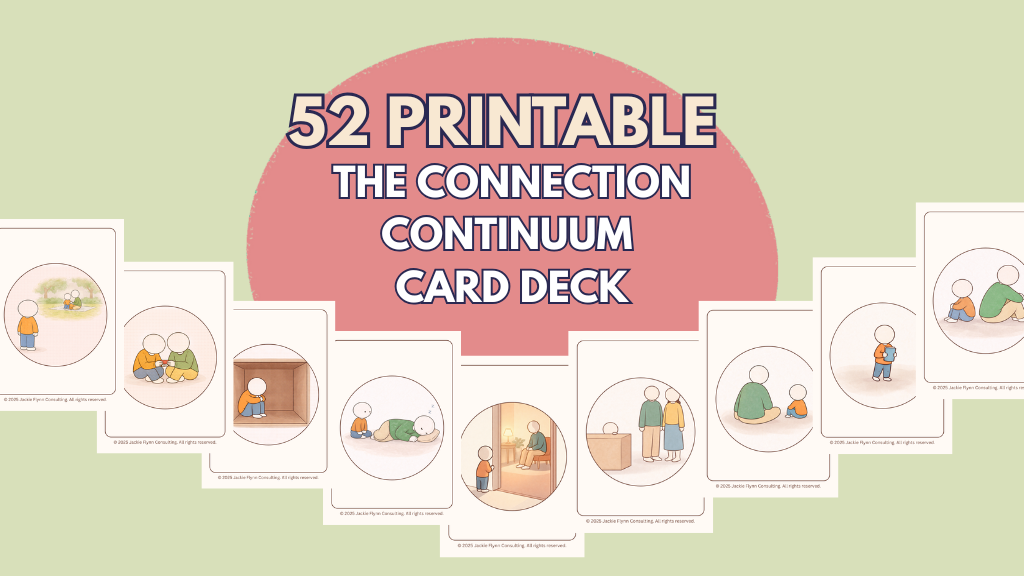
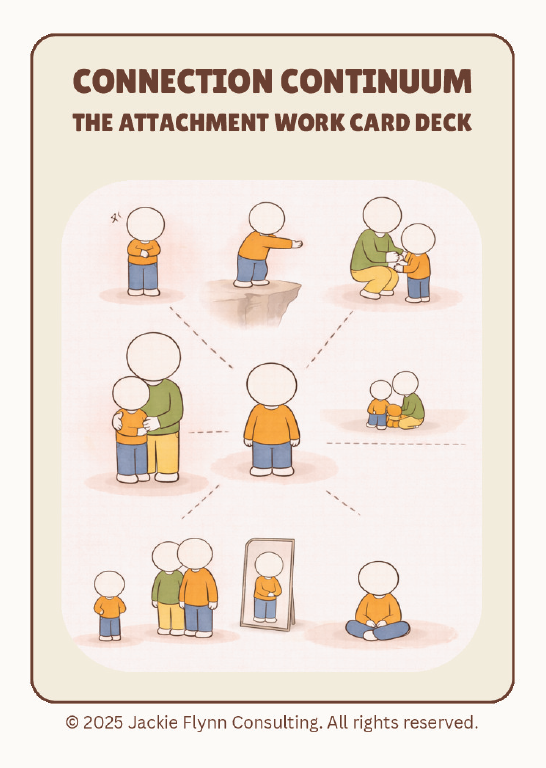
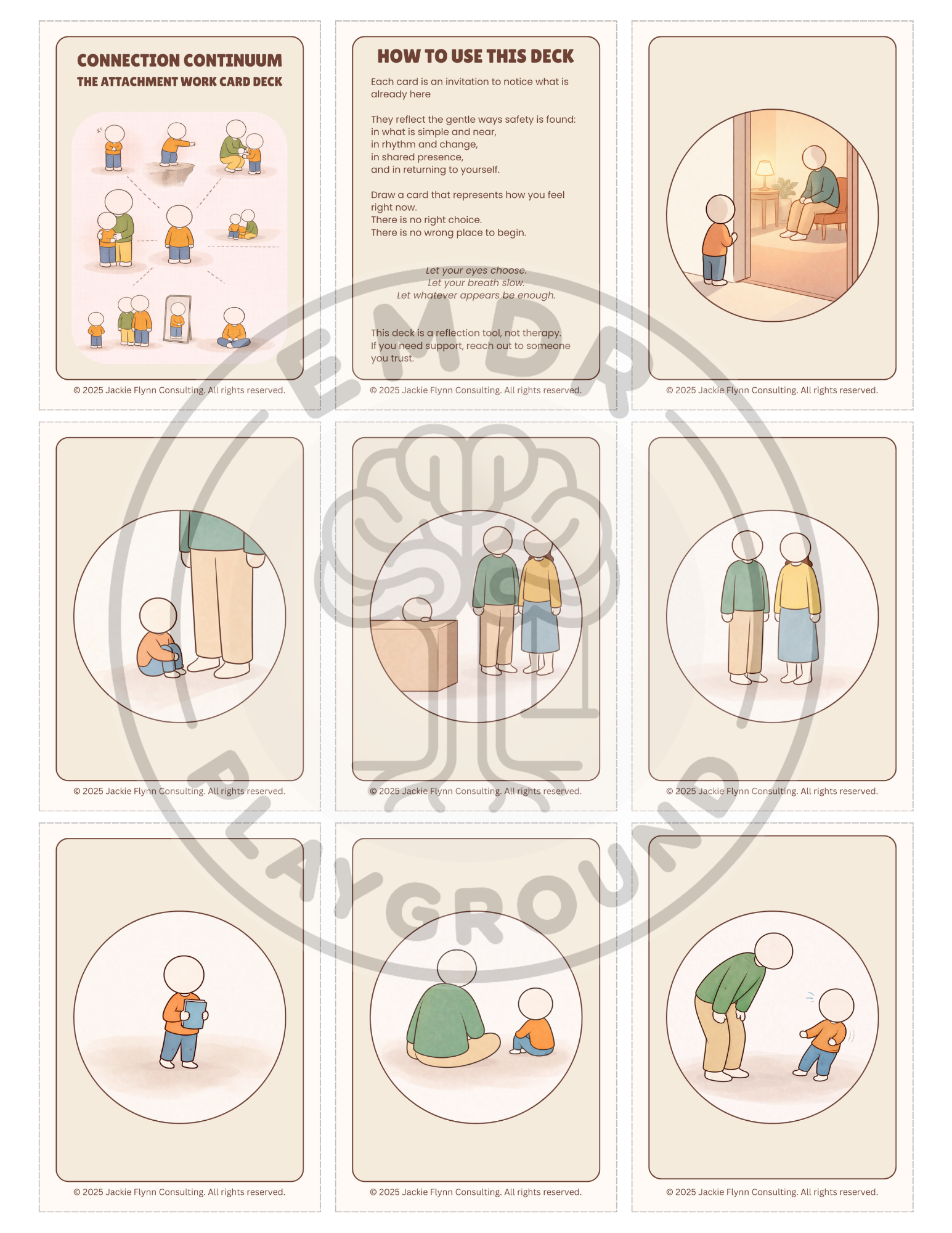
The printable deck includes 52 illustrated image cards, a cover, and a how-to-use card. The artwork combines warm photographic backgrounds with simple cream-colored illustrations and bold black outlines.
The images bring familiar objects into everyday settings, including:
Moments of connection: coffee mugs, two chairs, a letter, a phone message, and a framed photograph.
Comfort and home: a sleeping dog, a blanket, a warm bowl of food, pillows, and an open window.
Nature and movement: footprints beside the water, birds, rain, sunlight, a winding path, and walking boots.
Creativity and everyday interests: headphones, an easel, an open book, a record player, a guitar, and growing plants.
Objects that may hold a story: a cracked mug, a keepsake box, a teddy bear, a pocket watch, a mirror, and a suitcase.
These are images to explore, not explanations of what a person should feel. A familiar object might connect with a memory, a relationship, a hope, or something entirely different.
The person’s own meaning remains at the center.
HOW TO USE IT
Take a moment to look through the cards.
Ask gently: Which image speaks to you today?
Choose a card and spend some time with the image. Notice the feelings, thoughts, or memories that arise.
There are no right or wrong answers.
Let your story unfold.
Suggested conversation questions to accompany the images:
What draws your attention in this picture?
Does anything feel familiar or remind you of an experience?
What feelings, thoughts, or memories come to mind?
Is there anything you would like to share about what this image means to you?
The image can remain a starting point rather than something that needs to be fully explained. There is room for warmth, sadness, uncertainty, hope, or simply noticing that nothing particular comes up.
The deck may be integrated into:
EMDR
Play therapy
Talk therapy
Family work
Within these and other clinical approaches, the cards offer opportunities to explore emotions, relationships, memories, resilience, self-compassion, and the everyday experiences that shape a life.
This is a reflection tool, not a substitute for therapy or professional care.
For therapists looking for a gentle visual way to explore the ordinary moments that carry personal meaning…
the Being Human Card Deck was made for you.
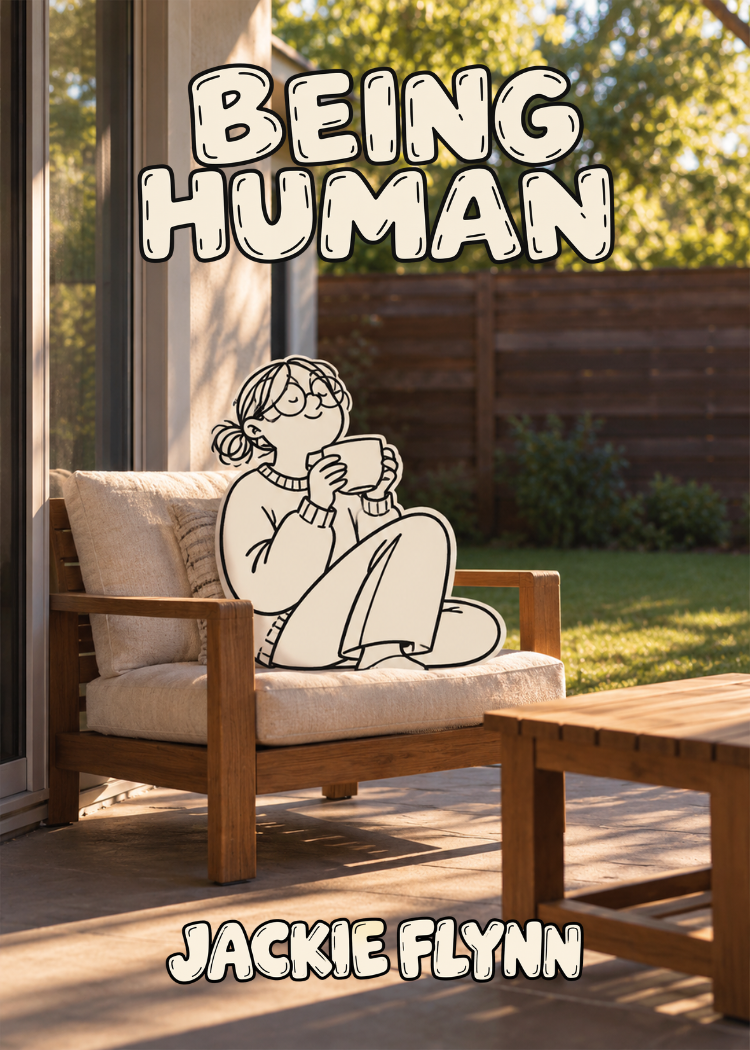 Image 1 of 9
 Image 2 of 9
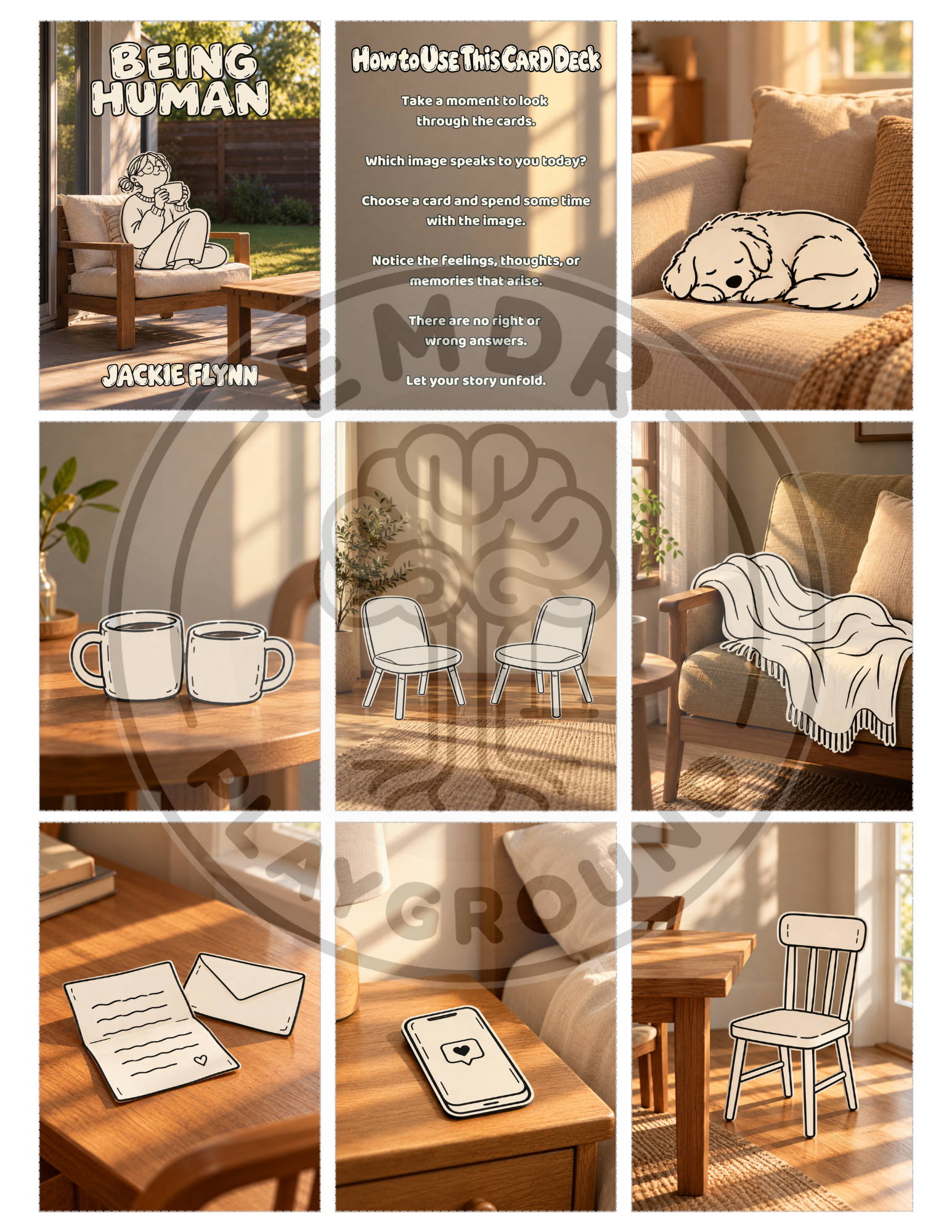 Image 3 of 9
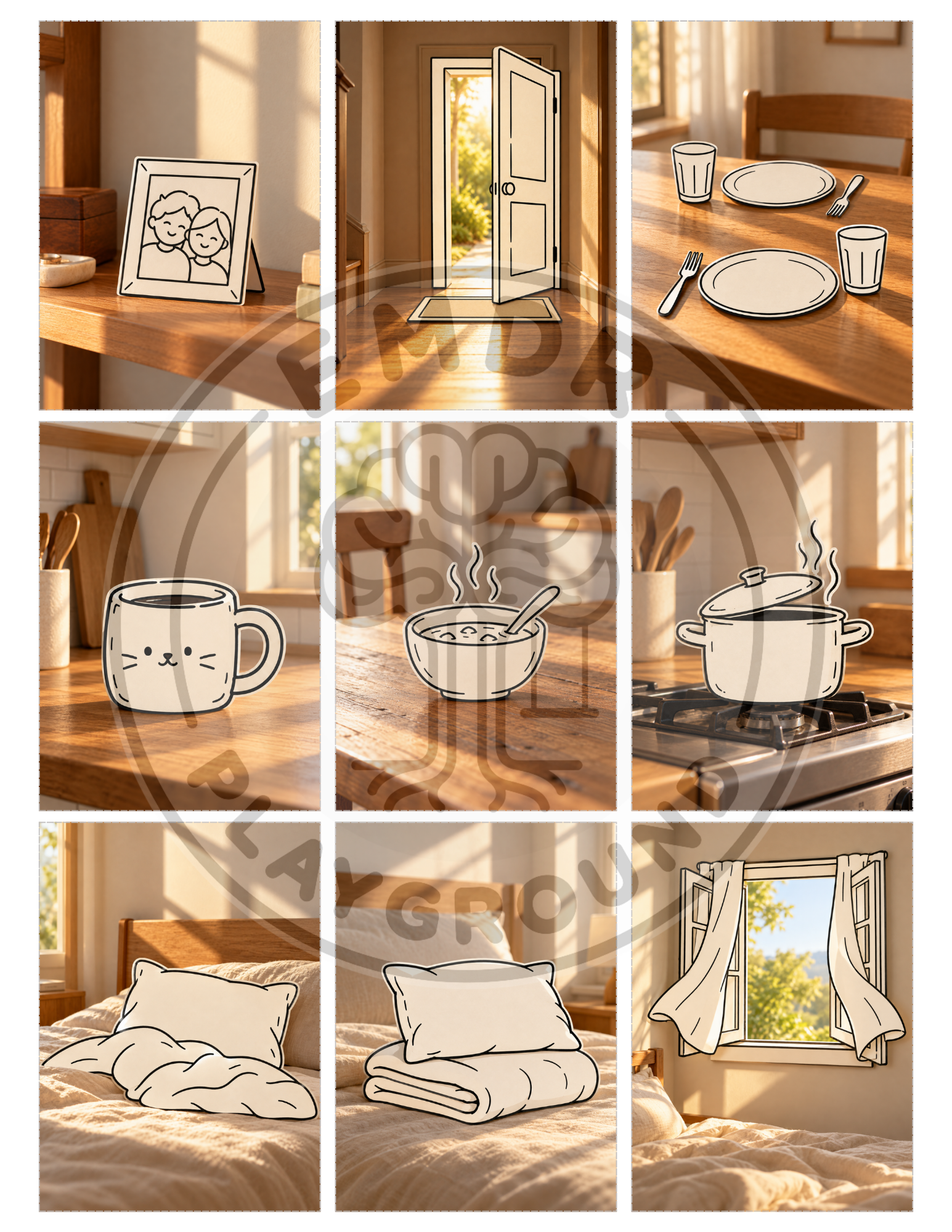 Image 4 of 9
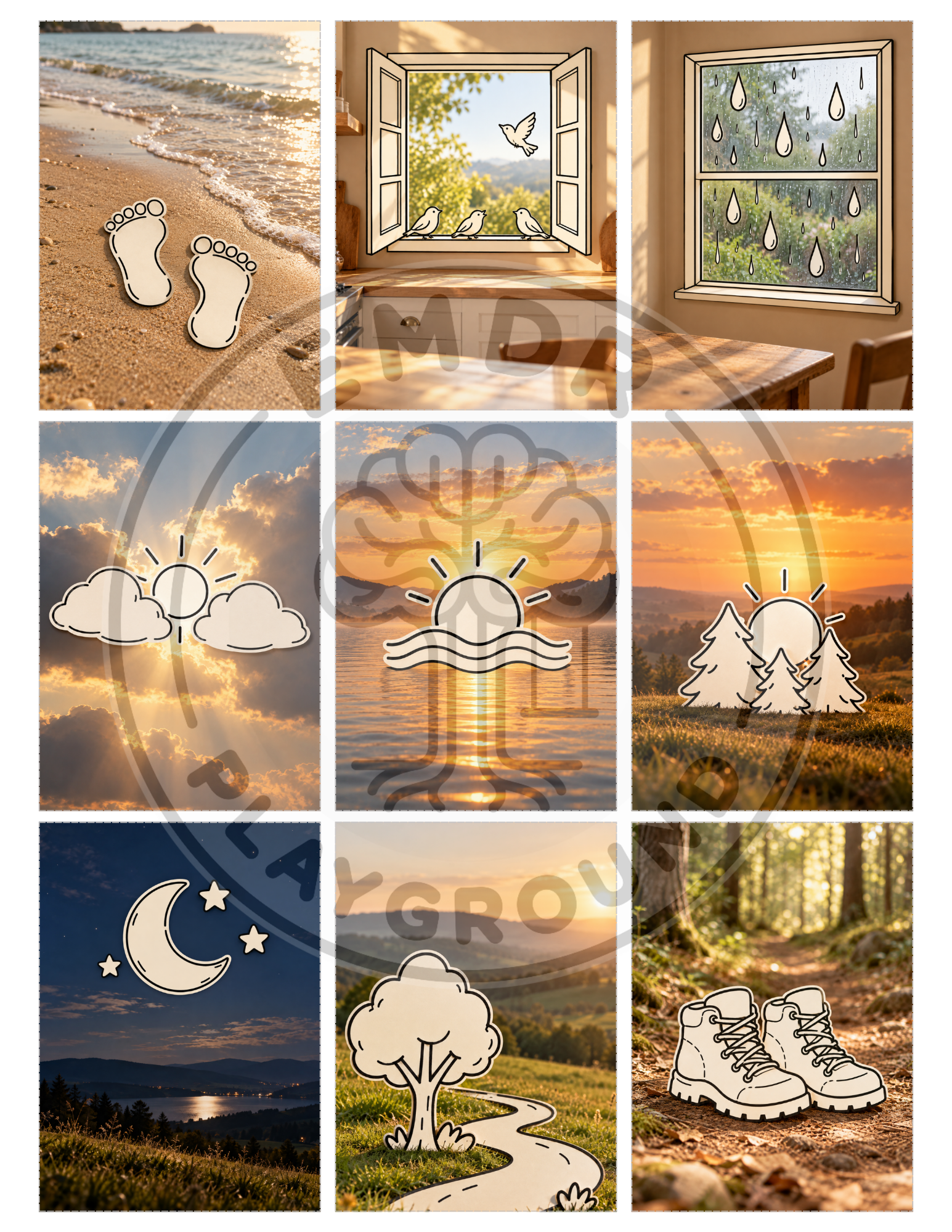 Image 5 of 9
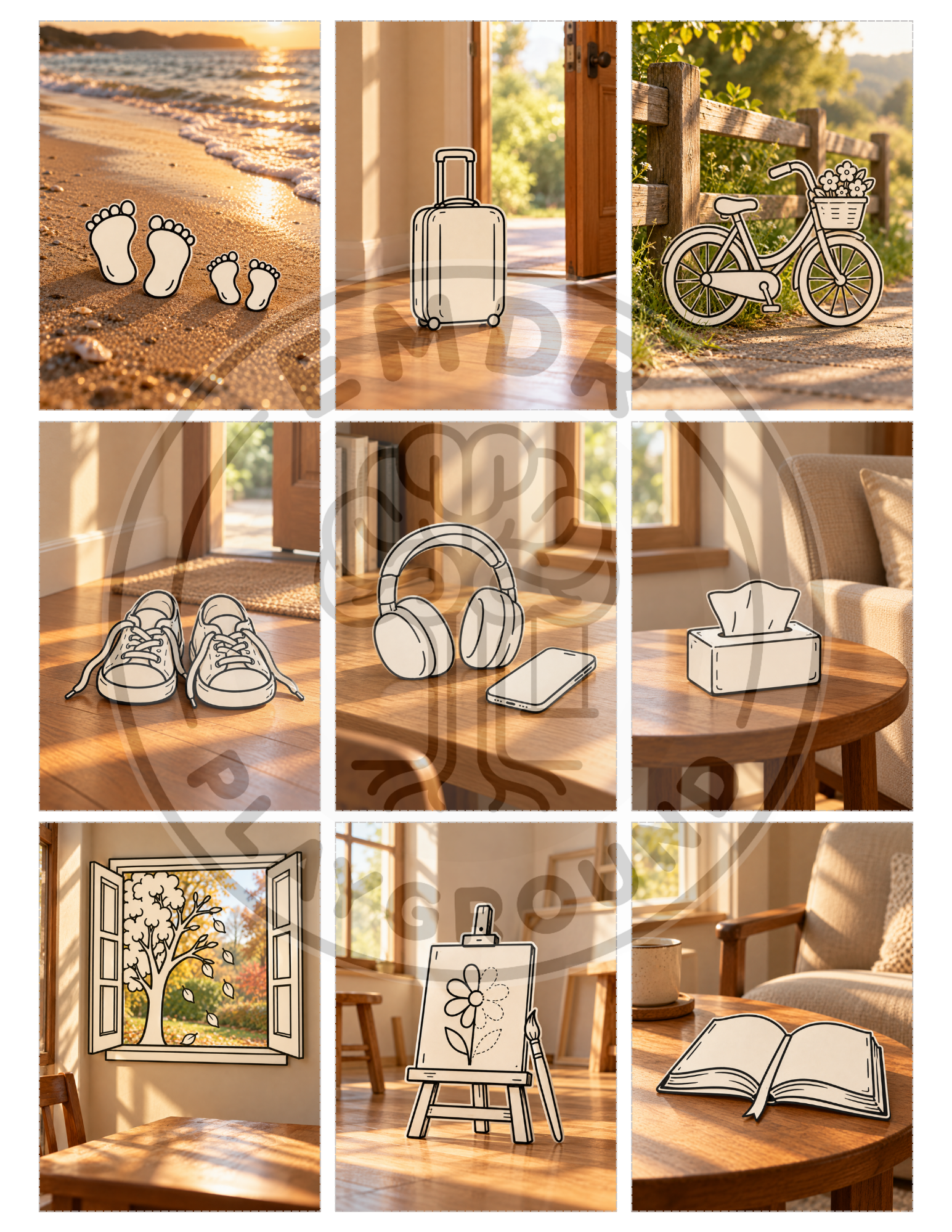 Image 6 of 9
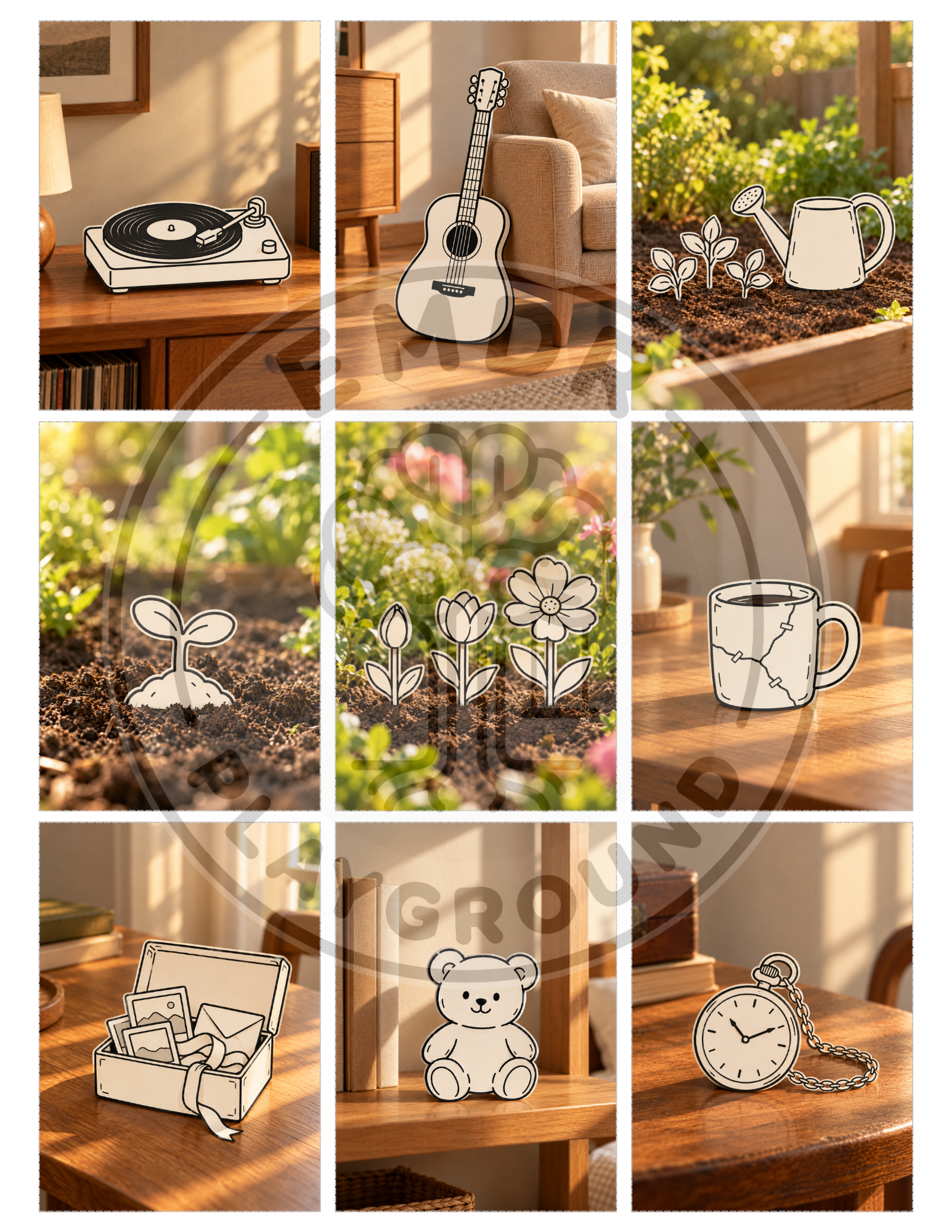 Image 7 of 9
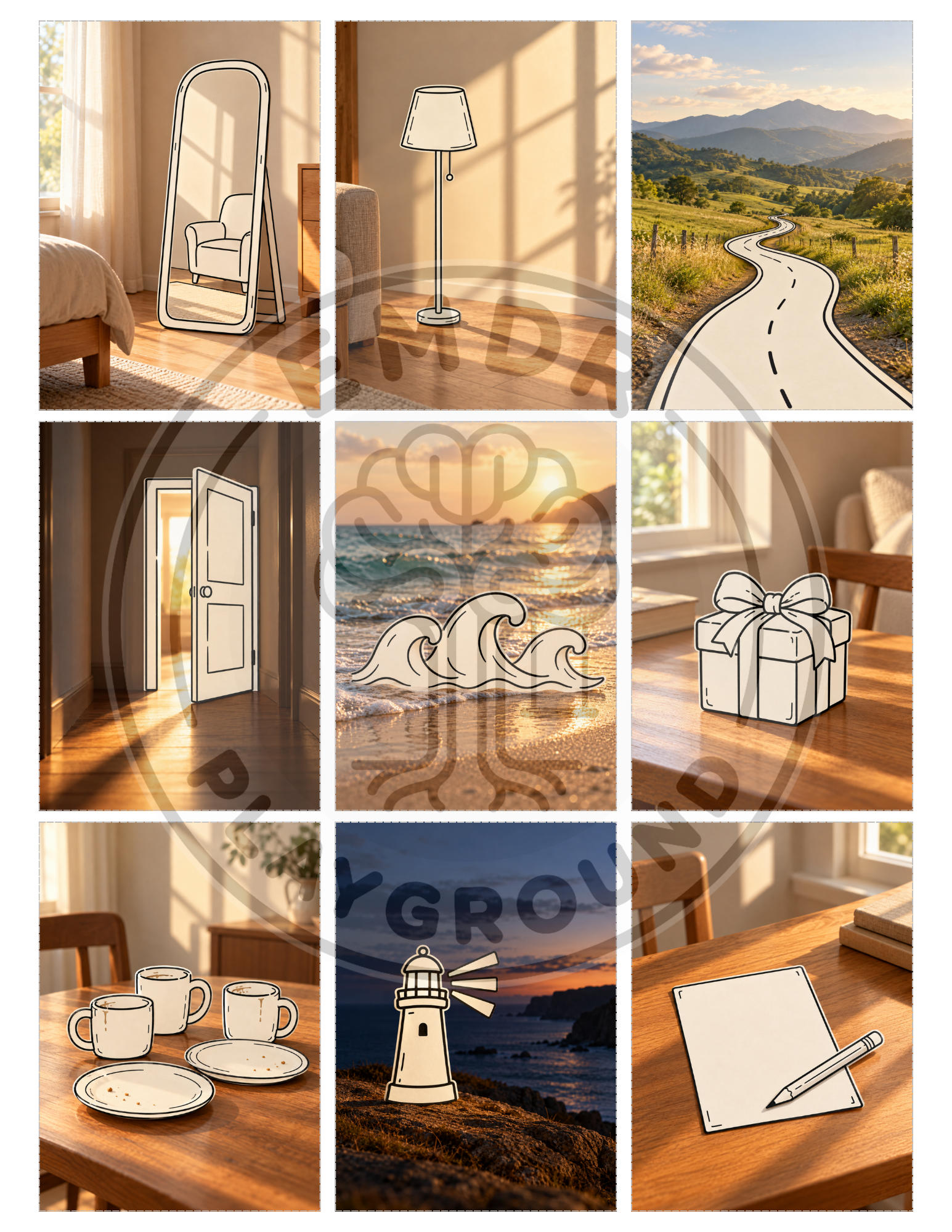 Image 8 of 9
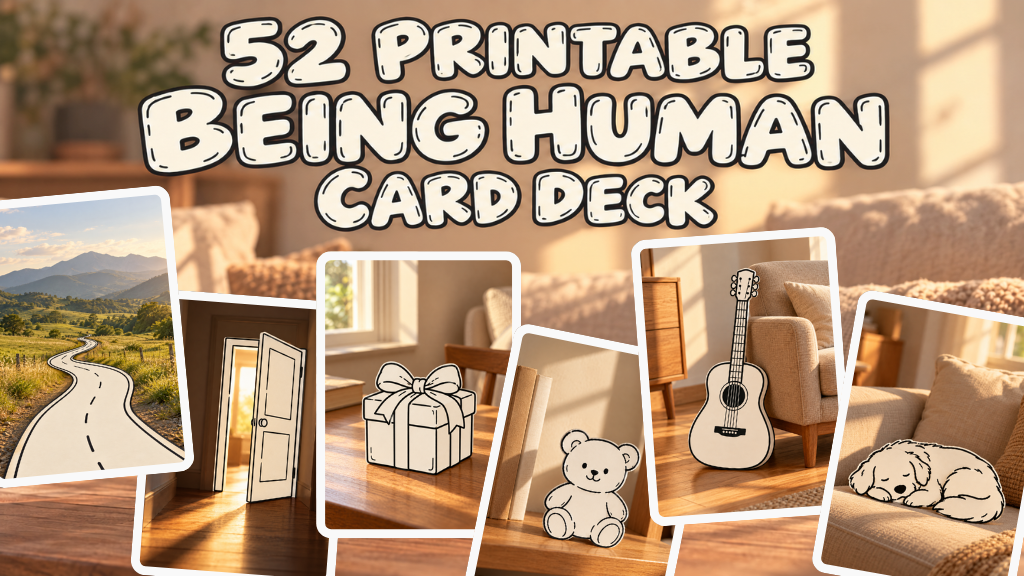 Image 9 of 9