COMPASSIONATE HOLDING CONTAINER
CARD DECK
Created by: Jackie Flynn
The Compassionate Holding Container Card Deck is a gentle clinical tool created to support compassionate containment when emotions, memories, worries, or difficult thoughts feel too big to hold all at once.
Rather than trying to make difficult experiences disappear, the deck helps children and adults imagine a safe, caring place where those experiences can rest until they feel ready to return to them. Each image offers a warm and comforting container that communicates protection, care, and hope.
When Something Feels Too Heavy to Hold Right Now
There are moments when a feeling, memory, worry, or thought may need somewhere safe to rest.
The Compassionate Holding Container Card Deck offers gentle visual choices that can help a person imagine placing a difficult experience somewhere protected and cared for. The experience is not ignored, erased, or pushed away. It is held with compassion until there is enough readiness, support, or steadiness to return to it.
This deck supports children and adults to:
create an imagined place of safety and containment
pause when emotions or memories feel overwhelming
temporarily set aside difficult material without dismissing it
strengthen preparation and stabilization
develop comforting internal resources
approach difficult experiences with compassion rather than avoidance
identify imagery that communicates safety, care, and protection
return to challenging material when greater readiness is present
Sometimes choosing one gentle image is enough to help something difficult feel more safely held.
WHAT’S INSIDE:
The deck includes 52 open-ended container images, each designed to offer a different sense of warmth, safety, protection, and care.
The images include:
animals gently holding glowing light
nests, dens, tree hollows, and sheltered natural spaces
blanket forts, hammocks, quilts, pillows, and cozy resting places
backpacks, pockets, books, bags, jars, boxes, baskets, and chests
lanterns, glowing stars, moons, and other sources of comforting light
cottages, doorways, lighthouses, waiting spaces, and protected rooms
boats, shells, roots, gardens, and other nature-inspired containers
Some images feel soft and close. Others feel strong, private, spacious, portable, or deeply protected. The variety allows each person to notice which container feels safest or most comforting in that moment.
There is no single meaning attached to any image. A backpack may feel portable and private. A nest may feel soft and protected. A lighthouse may feel steady during a storm. A locked chest may feel secure, while an open doorway may communicate that the person can return whenever they are ready.
What matters most is the person’s own sense of safety and connection with the image.
HOW TO USE IT
Take a moment to look at the image.
You might gently ask:
What feels warm, safe, or comforting to you?
What might this special place be able to hold for a little while?
Is there something that feels a little too heavy to carry right now?
Could you imagine placing it here, just for now?
What would help it feel safe and cared for while it waits?
How will you know when you are ready to return to it?
The person may choose the container that feels safest, imagine placing a difficult experience inside, and decide whether it needs to be closed, protected, watched over, carried nearby, or left somewhere secure.
It can remain safe, cared for, and waiting until they are ready to come back.
There is no right or wrong way to imagine this.
This is a reflection tool, not therapy.
Reach out for support if needed.
EMDR preparation and stabilization
Play therapy
Talk therapy
Family work
Trauma-informed care
Resourcing and grounding
Emotional regulation support
Difficult transitions
Between-session reflection
Individual or shared therapeutic work
If you are looking for a gentle tool that helps difficult experiences feel safely held without being avoided or pushed away…
the Compassionate Holding Container Card Deck was made for you.
COMPASSIONATE HOLDING CONTAINER
CARD DECK
Created by: Jackie Flynn
The Compassionate Holding Container Card Deck is a gentle clinical tool created to support compassionate containment when emotions, memories, worries, or difficult thoughts feel too big to hold all at once.
Rather than trying to make difficult experiences disappear, the deck helps children and adults imagine a safe, caring place where those experiences can rest until they feel ready to return to them. Each image offers a warm and comforting container that communicates protection, care, and hope.
When Something Feels Too Heavy to Hold Right Now
There are moments when a feeling, memory, worry, or thought may need somewhere safe to rest.
The Compassionate Holding Container Card Deck offers gentle visual choices that can help a person imagine placing a difficult experience somewhere protected and cared for. The experience is not ignored, erased, or pushed away. It is held with compassion until there is enough readiness, support, or steadiness to return to it.
This deck supports children and adults to:
create an imagined place of safety and containment
pause when emotions or memories feel overwhelming
temporarily set aside difficult material without dismissing it
strengthen preparation and stabilization
develop comforting internal resources
approach difficult experiences with compassion rather than avoidance
identify imagery that communicates safety, care, and protection
return to challenging material when greater readiness is present
Sometimes choosing one gentle image is enough to help something difficult feel more safely held.
WHAT’S INSIDE:
The deck includes 52 open-ended container images, each designed to offer a different sense of warmth, safety, protection, and care.
The images include:
animals gently holding glowing light
nests, dens, tree hollows, and sheltered natural spaces
blanket forts, hammocks, quilts, pillows, and cozy resting places
backpacks, pockets, books, bags, jars, boxes, baskets, and chests
lanterns, glowing stars, moons, and other sources of comforting light
cottages, doorways, lighthouses, waiting spaces, and protected rooms
boats, shells, roots, gardens, and other nature-inspired containers
Some images feel soft and close. Others feel strong, private, spacious, portable, or deeply protected. The variety allows each person to notice which container feels safest or most comforting in that moment.
There is no single meaning attached to any image. A backpack may feel portable and private. A nest may feel soft and protected. A lighthouse may feel steady during a storm. A locked chest may feel secure, while an open doorway may communicate that the person can return whenever they are ready.
What matters most is the person’s own sense of safety and connection with the image.
HOW TO USE IT
Take a moment to look at the image.
You might gently ask:
What feels warm, safe, or comforting to you?
What might this special place be able to hold for a little while?
Is there something that feels a little too heavy to carry right now?
Could you imagine placing it here, just for now?
What would help it feel safe and cared for while it waits?
How will you know when you are ready to return to it?
The person may choose the container that feels safest, imagine placing a difficult experience inside, and decide whether it needs to be closed, protected, watched over, carried nearby, or left somewhere secure.
It can remain safe, cared for, and waiting until they are ready to come back.
There is no right or wrong way to imagine this.
This is a reflection tool, not therapy.
Reach out for support if needed.
EMDR preparation and stabilization
Play therapy
Talk therapy
Family work
Trauma-informed care
Resourcing and grounding
Emotional regulation support
Difficult transitions
Between-session reflection
Individual or shared therapeutic work
If you are looking for a gentle tool that helps difficult experiences feel safely held without being avoided or pushed away…
the Compassionate Holding Container Card Deck was made for you.
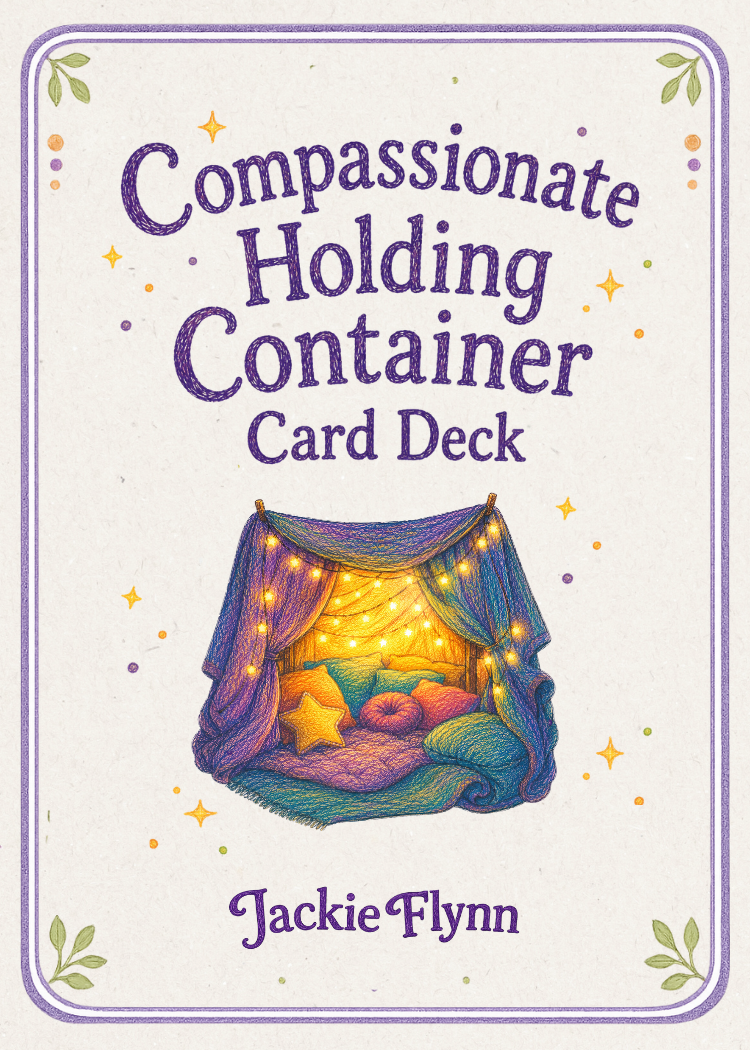 Image 1 of 10
 Image 2 of 10
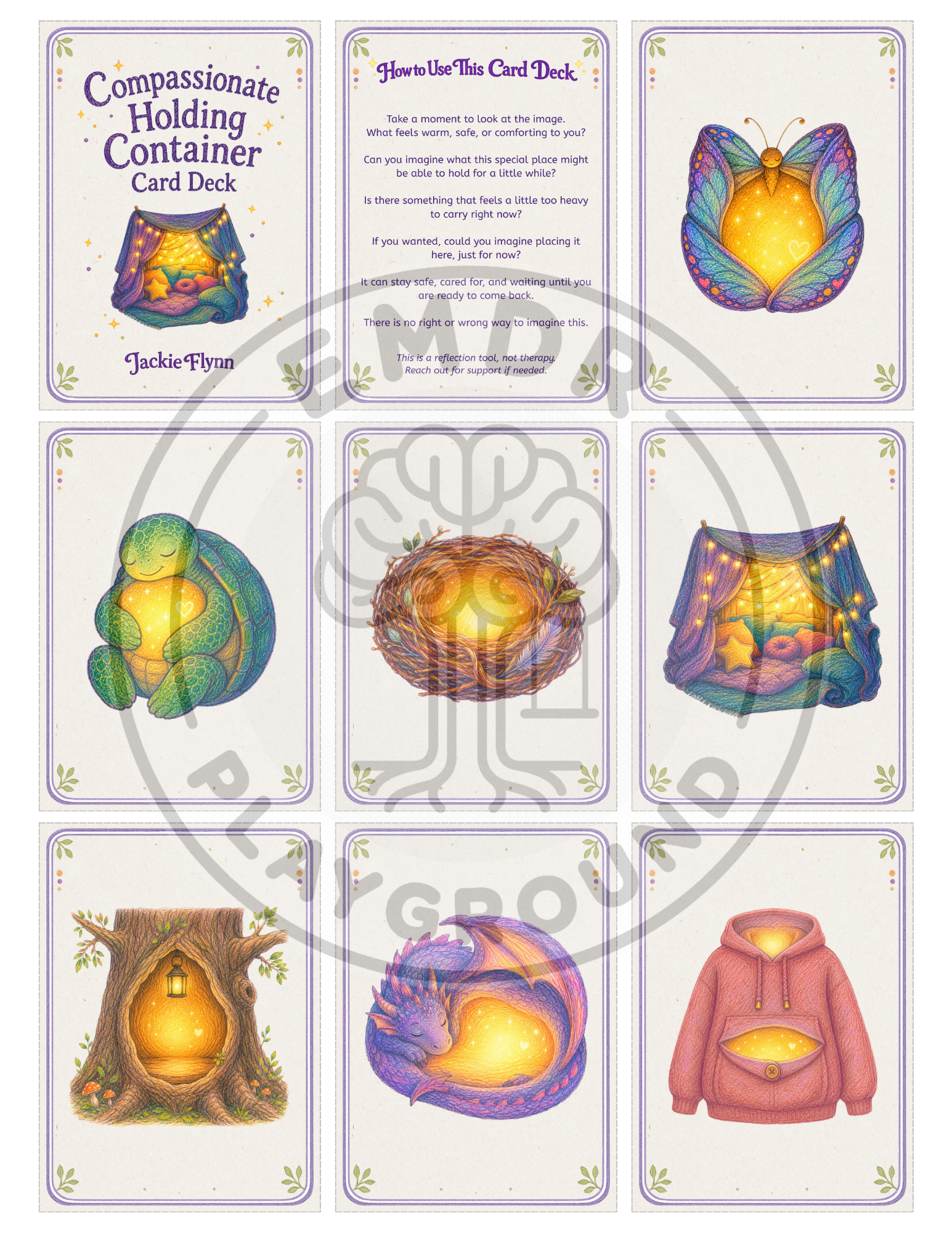 Image 3 of 10
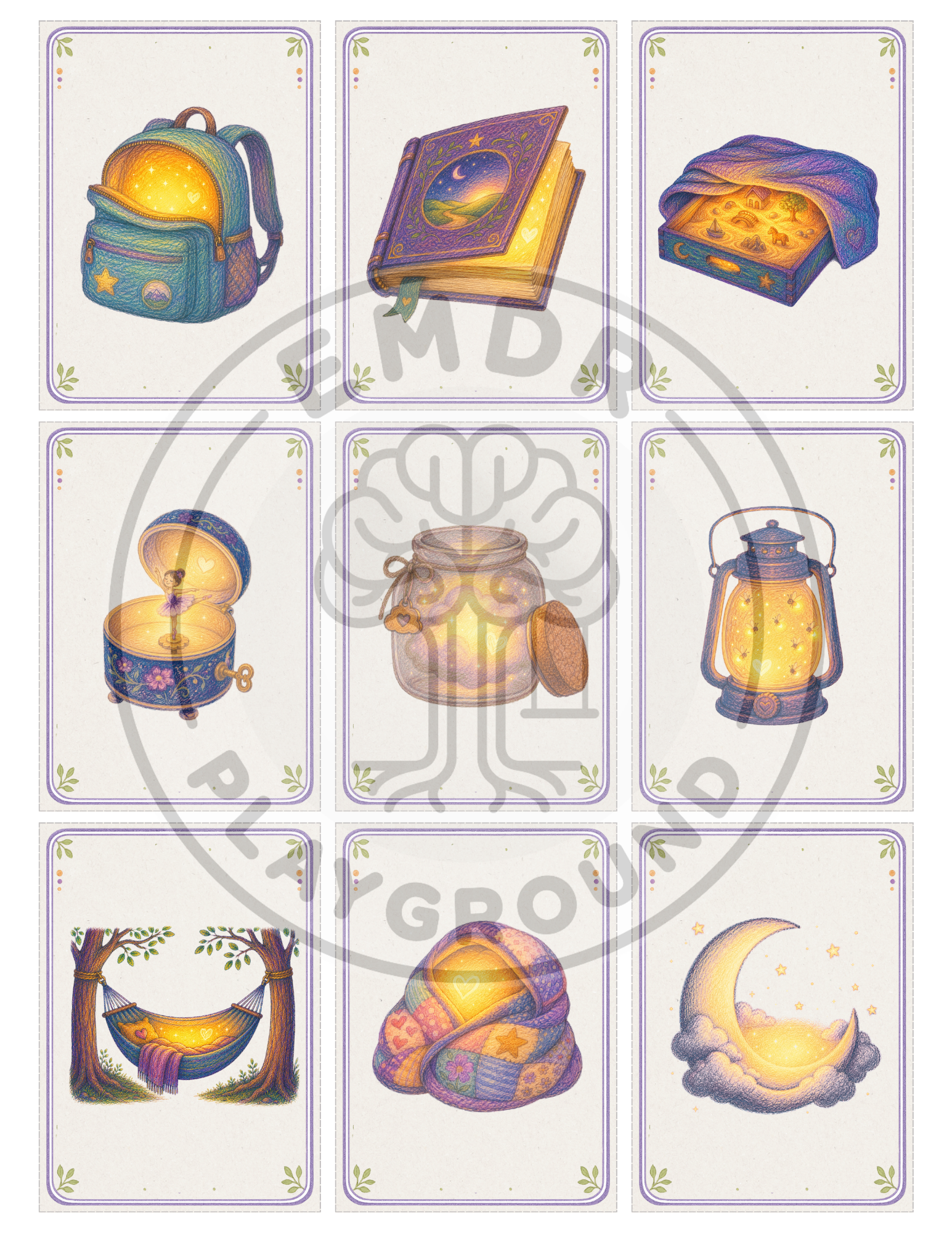 Image 4 of 10
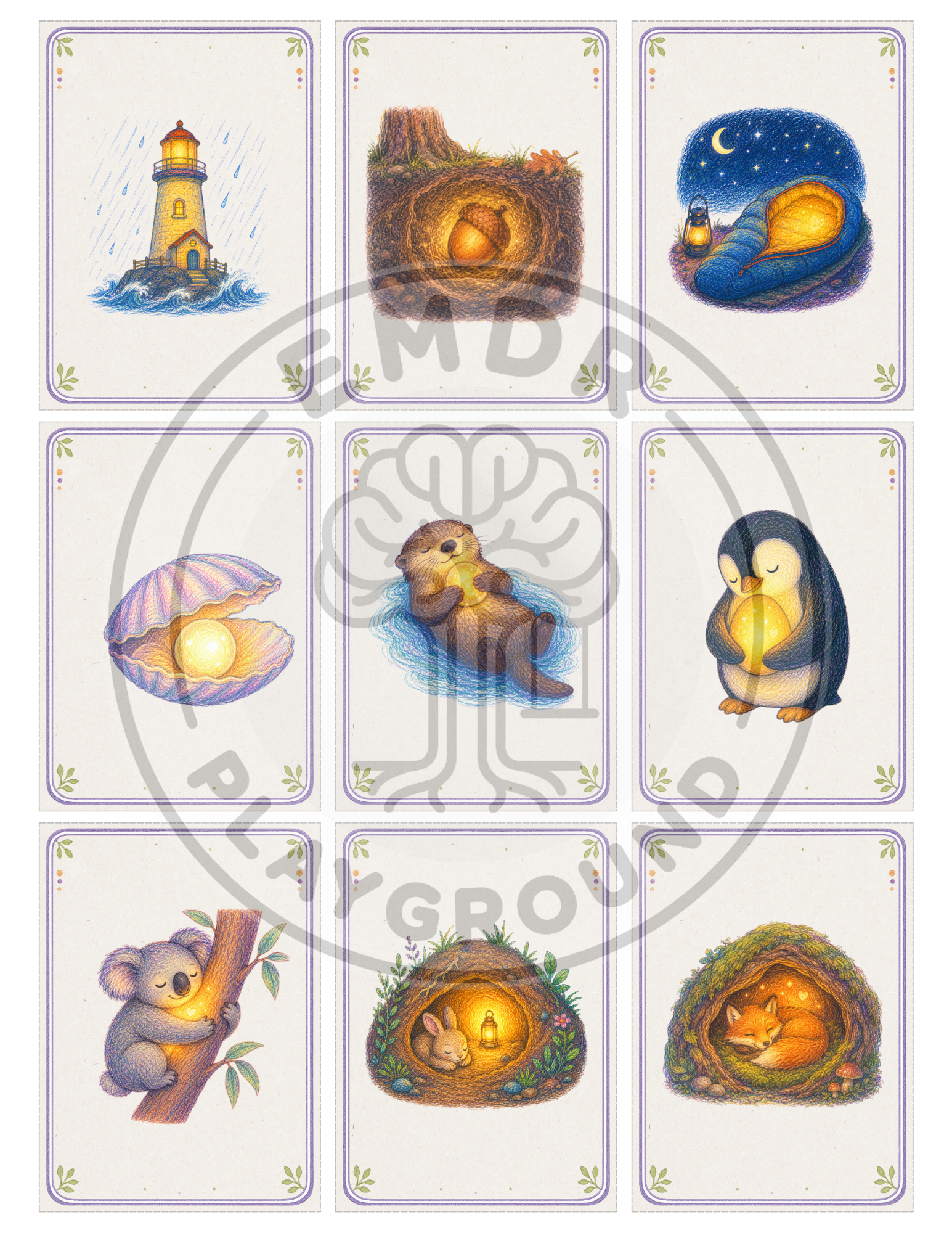 Image 5 of 10
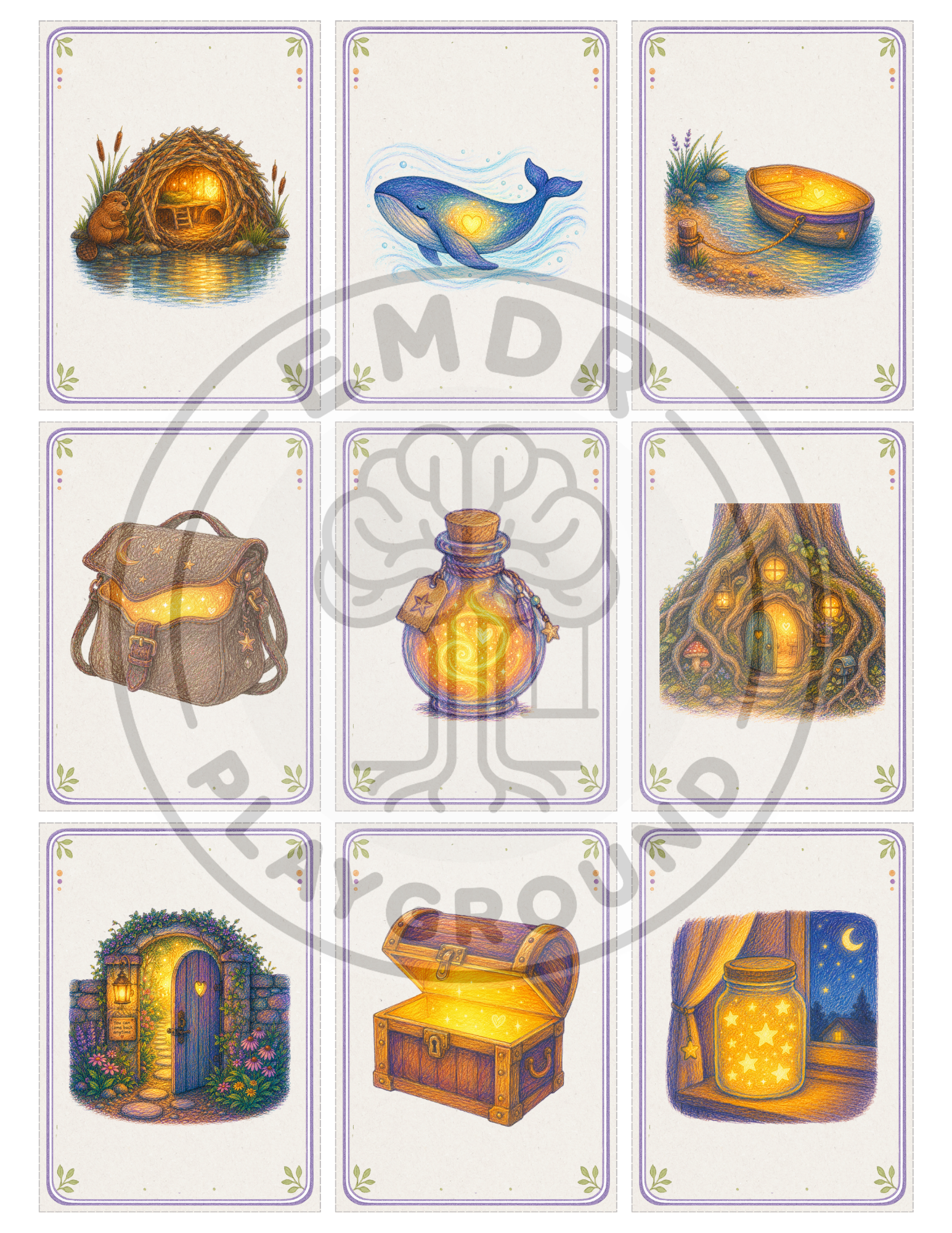 Image 6 of 10
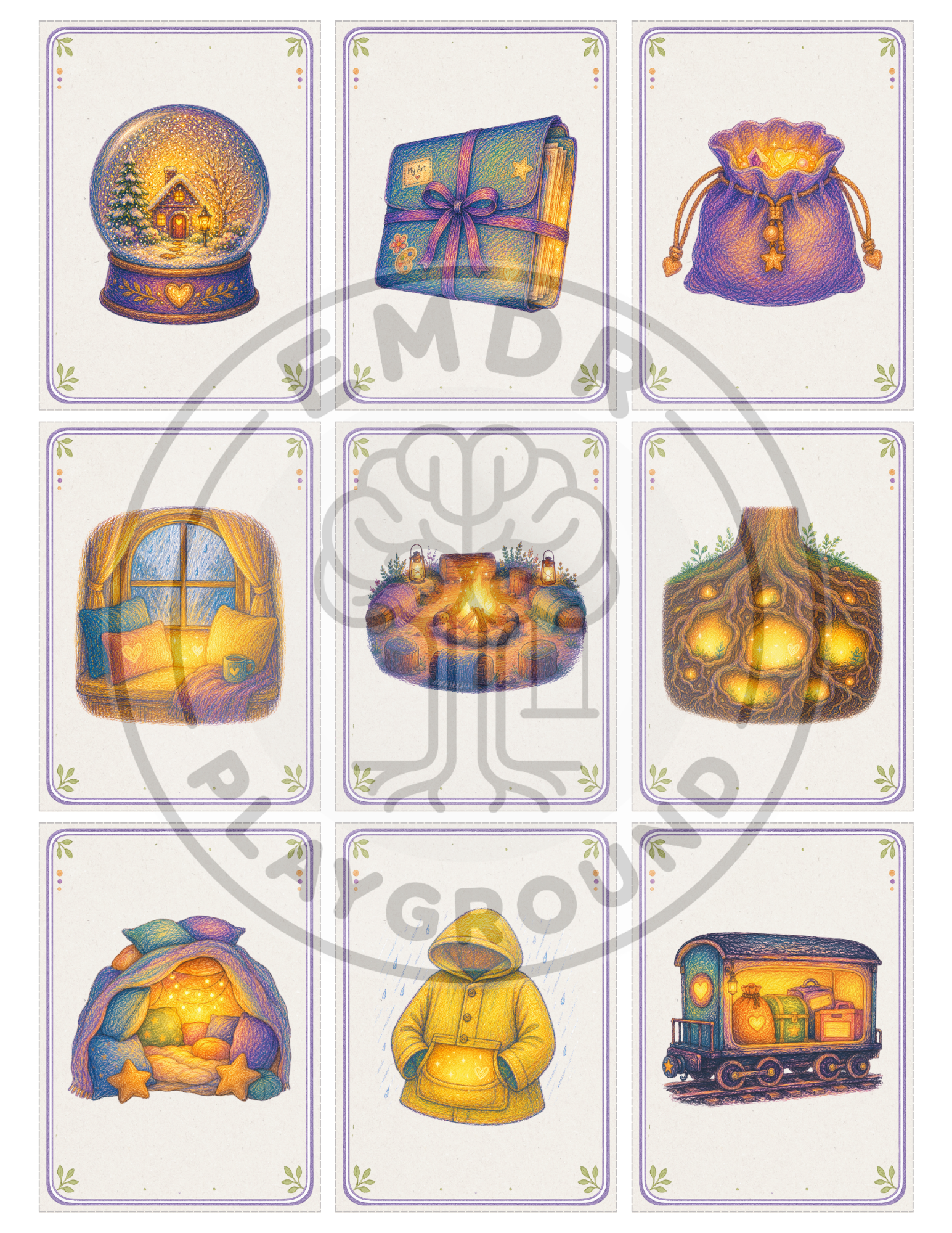 Image 7 of 10
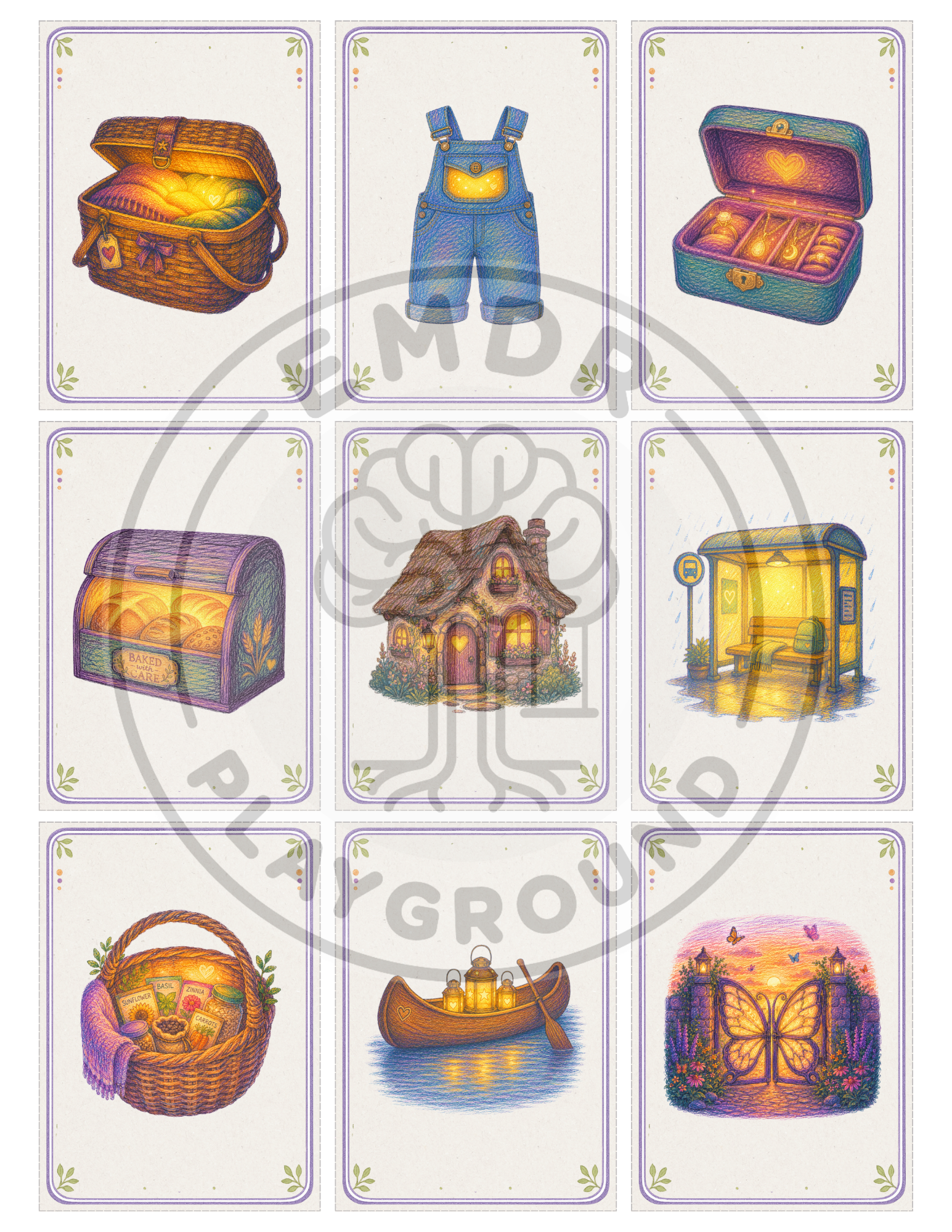 Image 8 of 10
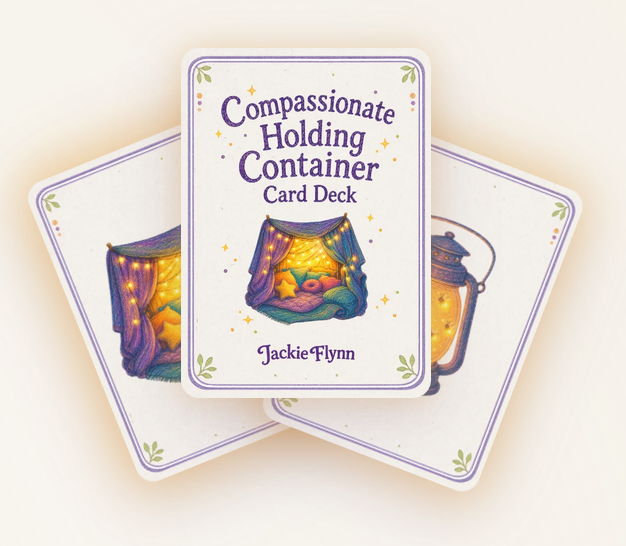 Image 9 of 10
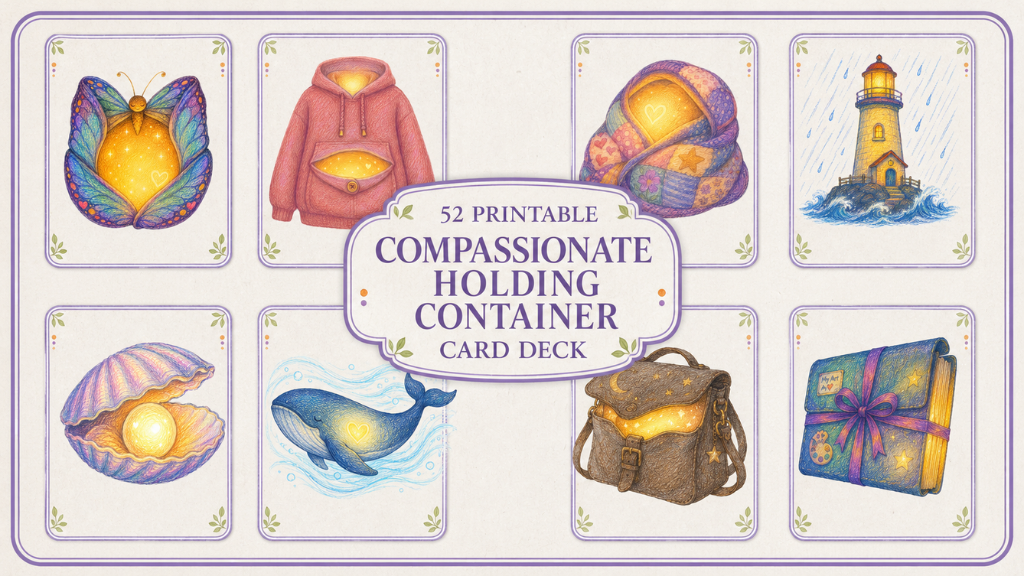 Image 10 of 10