
Integrating the Oaklander Model Across the 8 Phases of EMDR Therapy
SELF-PACED ONLINE TRAINING
Integrating the Oaklander Model Gestalt Play Therapy Across the 8 Phases of EMDR Therapy
Hosted by Jackie Flynn, EdS, LMHC-S, RPT-S™, RST-C/T, EMDRIA Trainer and Registered Play Therapy Supervisor™ & Karen Fried, PsyD, LMFT
Discover how the Oaklander Model of Gestalt Play Therapy can be thoughtfully woven into the eight phases of EMDR Therapy when working with children and adolescents.
Explore creative, experiential, and developmentally attuned ways to strengthen emotional contact, self-support, and expression while staying grounded in the structure and fidelity of EMDR.
3 EMDRIA CREDITS • 21 LESSONS • SELF-PACED • $197
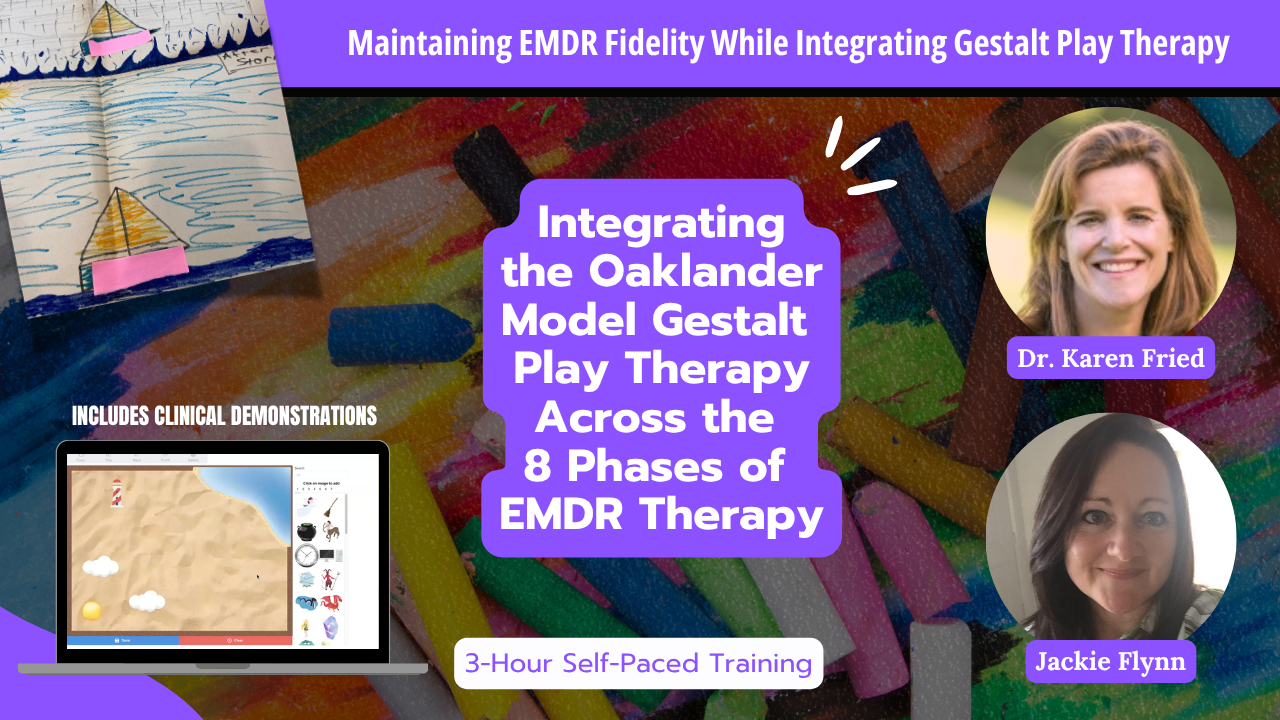
Children Don’t Always Process Through Words.
Children often communicate through play, movement, images, stories, symbols, relationships, and creativity.
When we make space for those forms of communication within EMDR Therapy, we can meet children in ways that feel more natural and developmentally responsive without losing sight of the eight-phase framework.
This training brings together the expressive and relational depth of the Oaklander Model with the structure of EMDR Therapy, helping clinicians approach child and adolescent work with greater intention, flexibility, and confidence.
Creative Tools. Clinical Intention. EMDR Fidelity.
Emotional Contact & Self-Support
Explore foundational principles of the Oaklander Model that support emotional awareness, connection, expression, and a stronger developing sense of self.
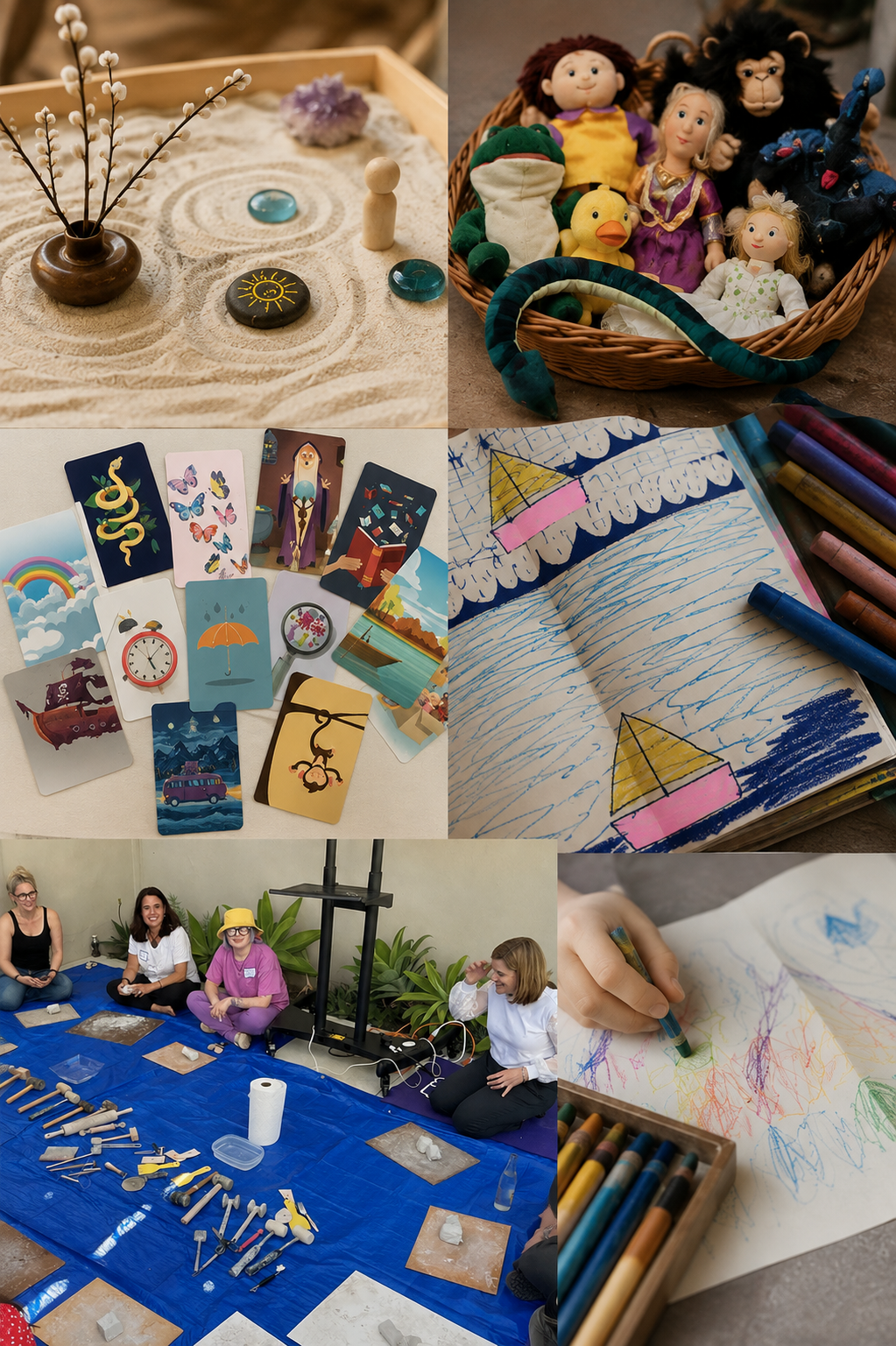
Art, Sandtray & Puppets
Learn how expressive and projective interventions can create additional pathways for children to communicate, explore experiences, and engage in the therapeutic process.
Integration Across All 8 Phases
Explore ways Oaklander-informed interventions can be thoughtfully incorporated throughout the eight phases of EMDR Therapy.
Developmentally Attuned EMDR
Consider the child’s developmental needs, capacity, pacing, and preferred ways of communicating when moving through the EMDR process.
Practical Clinical Examples
See how these ideas can translate into actual clinical work through demonstrations and practical examples.
Telehealth & Online Tools
Explore selected online play therapy resources and ethical considerations for using creative interventions in virtual settings.
EMDR Gives Us the Framework.
Play Helps Us Meet the Child Inside It.
The Oaklander Model emphasizes awareness, emotional contact, self-support, relationship, and experiential expression.
EMDR Therapy provides an eight-phase framework for helping clients process distressing experiences and move toward adaptive resolution.
This course explores what can happen when these two approaches come together thoughtfully.
The goal is not simply to add activities to EMDR.
It is to understand how creative and experiential interventions can support the therapeutic process while maintaining clinical purpose, appropriate pacing, and fidelity to EMDR.
Learn From Two Leaders in Child & Adolescent Therapy
Jackie Flynn, EdS, LMHC-S, RPT-S™
Jackie is an EMDRIA Approved Trainer and Consultant and Registered Play Therapist Supervisor™ whose work integrates EMDR Therapy with play, sandtray, expressive approaches, nervous system awareness, and developmentally attuned trauma treatment.
Through her trainings and consultation, Jackie helps clinicians use creativity with intention while remaining grounded in the structure and fidelity of EMDR.
Karen Fried, PsyD, LMFT
Karen is a licensed Marriage and Family Therapist, Educational Therapist, consultant, and President of the Violet Solomon Oaklander Foundation.
She teaches the Oaklander Model internationally and specializes in experiential and expressive approaches that support emotional awareness, self-support, connection, and a developing sense of self in children and adolescents.
Together
Jackie and Karen bring complementary clinical perspectives into one focused training experience:
the structure and trauma-processing framework of EMDR Therapy paired with the expressive, relational, and experiential depth of the Oaklander Model.
Designed for Clinicians Who Want More Ways to Reach the Child in Front of Them
This course may be especially helpful if you:
Work with children or adolescents using EMDR Therapy.
Want to incorporate play and expressive approaches with greater clinical intention.
Find that some young clients struggle to communicate their experiences verbally.
Use or are interested in art, sandtray, puppets, projective work, and other experiential interventions.
Want to stay developmentally responsive without moving away from the structure of EMDR.
Value both creativity and fidelity in trauma treatment.
Want practical examples that can help bridge the gap between theory and actual clinical application.
Practical Learning You Can Return To Again and Again
This is a self-paced online course, allowing you to move through the material on your own schedule and revisit concepts as they become relevant in your clinical work.
3 Course Sections
Course Orientation & Foundations
9 Lessons
EMDR + Oaklander Model Integrated
8 Lessons
Completion & Certificate
4 Lessons
21 Lessons Total
3 EMDRIA Credits
Self-Paced Online Access
$197 One-Time Purchase
More Than Play. More Than Protocol.
Children bring their whole selves into therapy.
Their bodies.
Their imagination.
Their relationships.
Their stories.
Their play.
Their ways of protecting themselves.
And their ways of showing us what they may not yet have words for.
Understanding how to work with those expressions inside the structure of EMDR can help make treatment feel more accessible, connected, and developmentally appropriate.
This training gives you another lens for thinking about how to honor the child’s natural language while remaining clinically grounded in EMDR Therapy.
Bring More Connection, Creativity & Developmental Attunement Into Your EMDR Work.
Explore how the Oaklander Model and EMDR Therapy can work together to support children and adolescents through creative expression, emotional contact, self-support, and intentional trauma treatment.